Transforming story discovery into a calm, confidence-building ritual
I led the redesign of FableFox's storytime experience to address a growing tension between what families want storytime to feel like and how it actually unfolds in practice. As the app's library expanded, parents and caregivers found themselves spending more time searching, scrolling, and negotiating than reading.
I focused on transforming story discovery from a stressful, open-ended task into a calm, confidence-building ritual that supports real family dynamics.
The storytime problem: decision fatigue at the worst moment
Bedtime storytime is meant to be connective and grounding. However, as FableFox's content library grew, the experience increasingly demanded cognitive effort from adults who were already managing tired children, time pressure, and competing needs.
The core tension was not a lack of content. It was decision fatigue. Families wanted storytime to feel calm, but the product required too much thinking at the wrong moment.

Understanding how families actually experience storytime
I conducted interviews with parents and grandparents who regularly read to children between the ages of one and twelve.
Time pressure is real
"I just want to find a bedtime story in under 5 minutes. With three kids, I can't spend forever hunting for the right fit."
Accessibility matters for all ages
"I need something easy to use when I babysit—big buttons, clear labels."
Mood and energy vary nightly
"Sometimes I just want a silly short story so my toddler will stay engaged."
Multi-child households complicate choice
"My kids are only a few years apart, but it makes a big difference when finding something they'll both like."
Families view storytime as a ritual that signals transition, closeness, and calm. The challenge was not discovery but decision support under emotional and time pressure.
FableFox's unique positioning
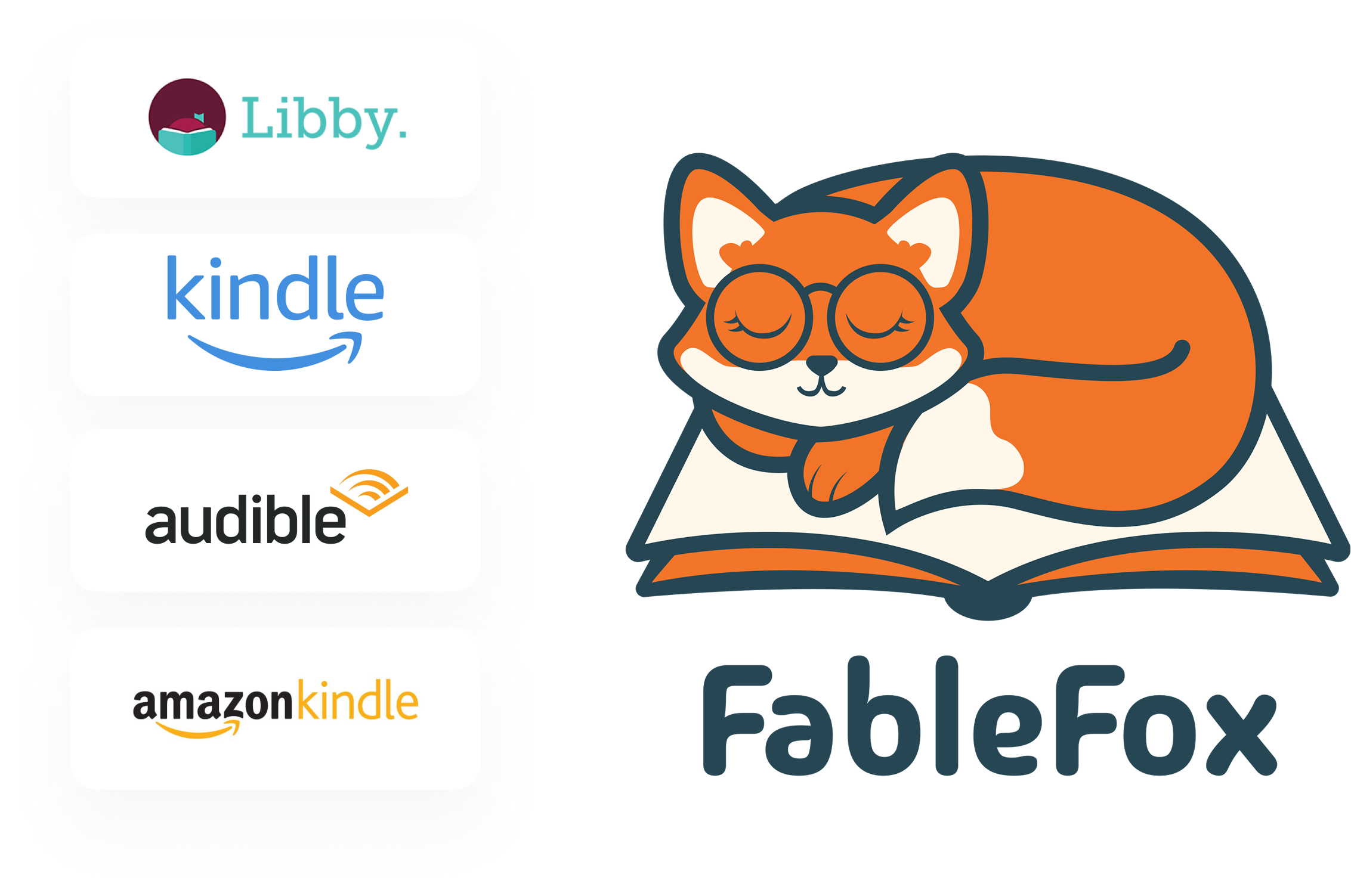
I completed a lean competitor review analyzing story search features across leading children's reading apps.
Personalization
Tailored to kids' ages, themes, and attention spans.
Multi-Child Friendly
Quick queuing for multiple preferences.
Simplicity
Intuitive filters and large visuals for parents and grandparents.
Ritual-First Design
Story selection framed as session preparation, not browsing.
Five core components shaped by research
- Personalized recommendations by age, theme, and length
- Quick filters like Bedtime Short, Silly, Adventure, Friendship, and Science
- Multi-child queue for siblings with different preferences
- One-tap start for fast bedtime reading
- End screen with recap and suggestions for tomorrow
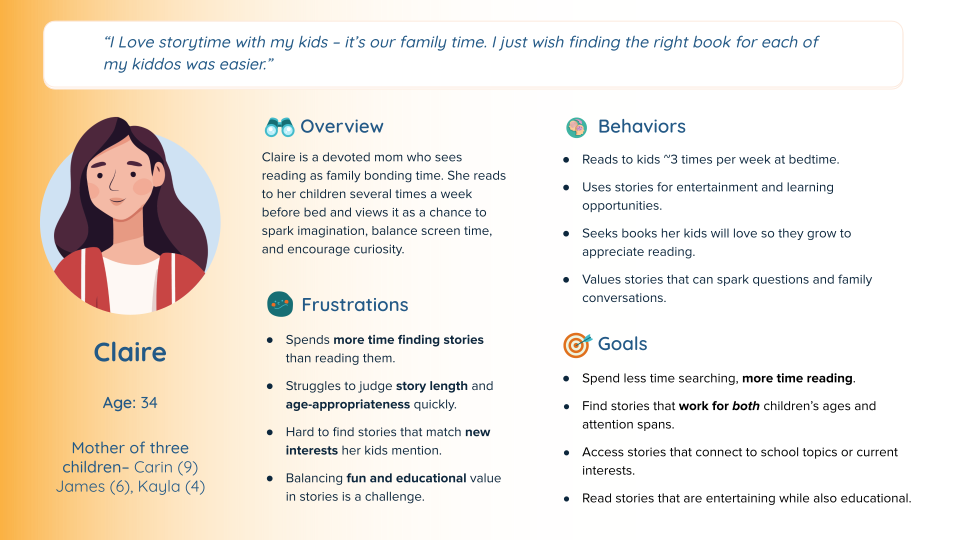
Guardrails for low-energy moments
I prioritized speed over precision, focused on reducing cognitive load rather than expanding choice, and designed explicitly for low-energy moments. These principles prevented feature creep as the solution took shape.
Three approaches to storytime flow
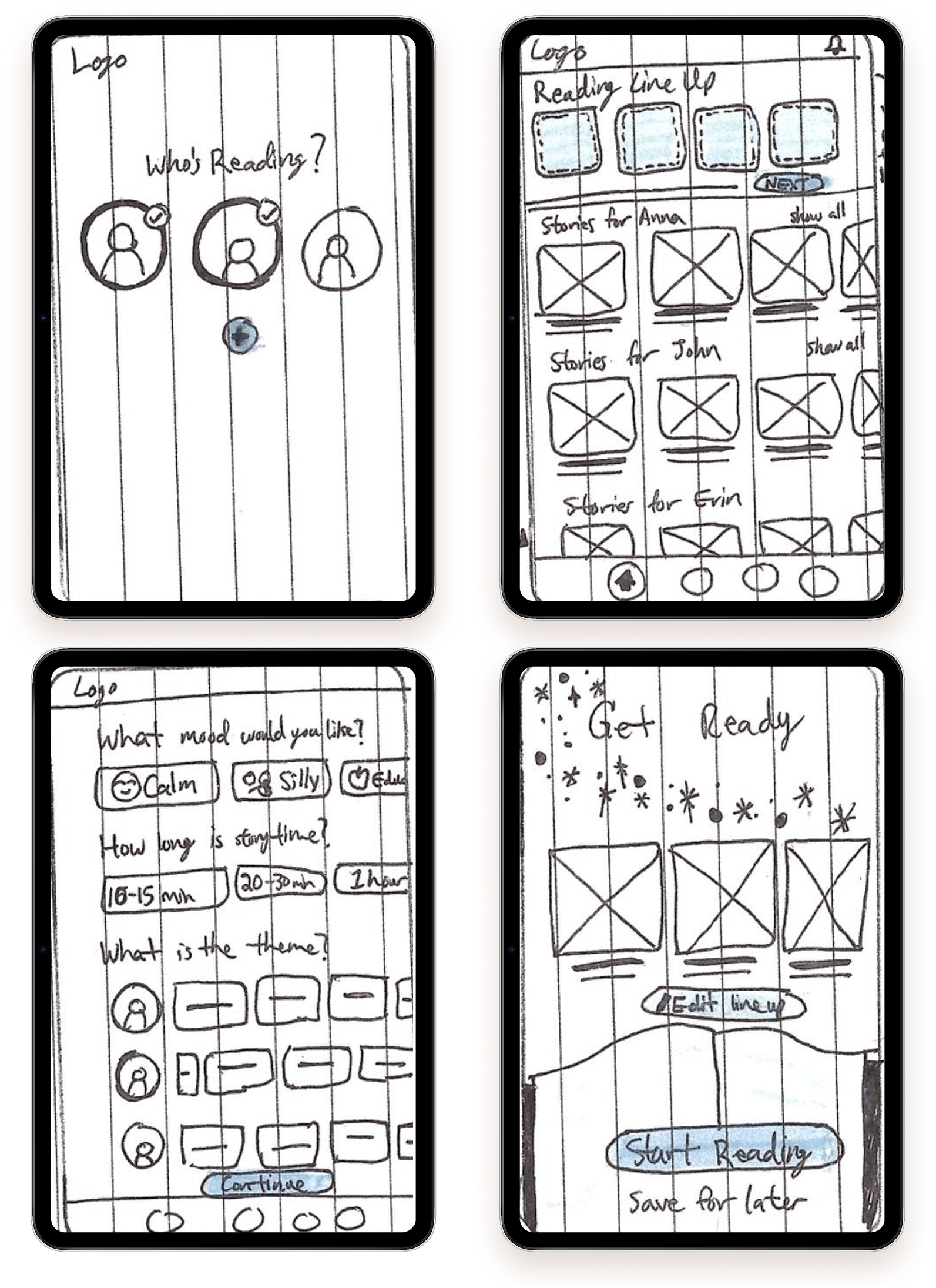
Flow 1: Guided Recommendations
Walks parents through a step-by-step narrowing process based on age, time, and mood.
Flow 2: Filtered Browsing with Playlists
Gives parents more control by allowing them to manually browse and build playlists.
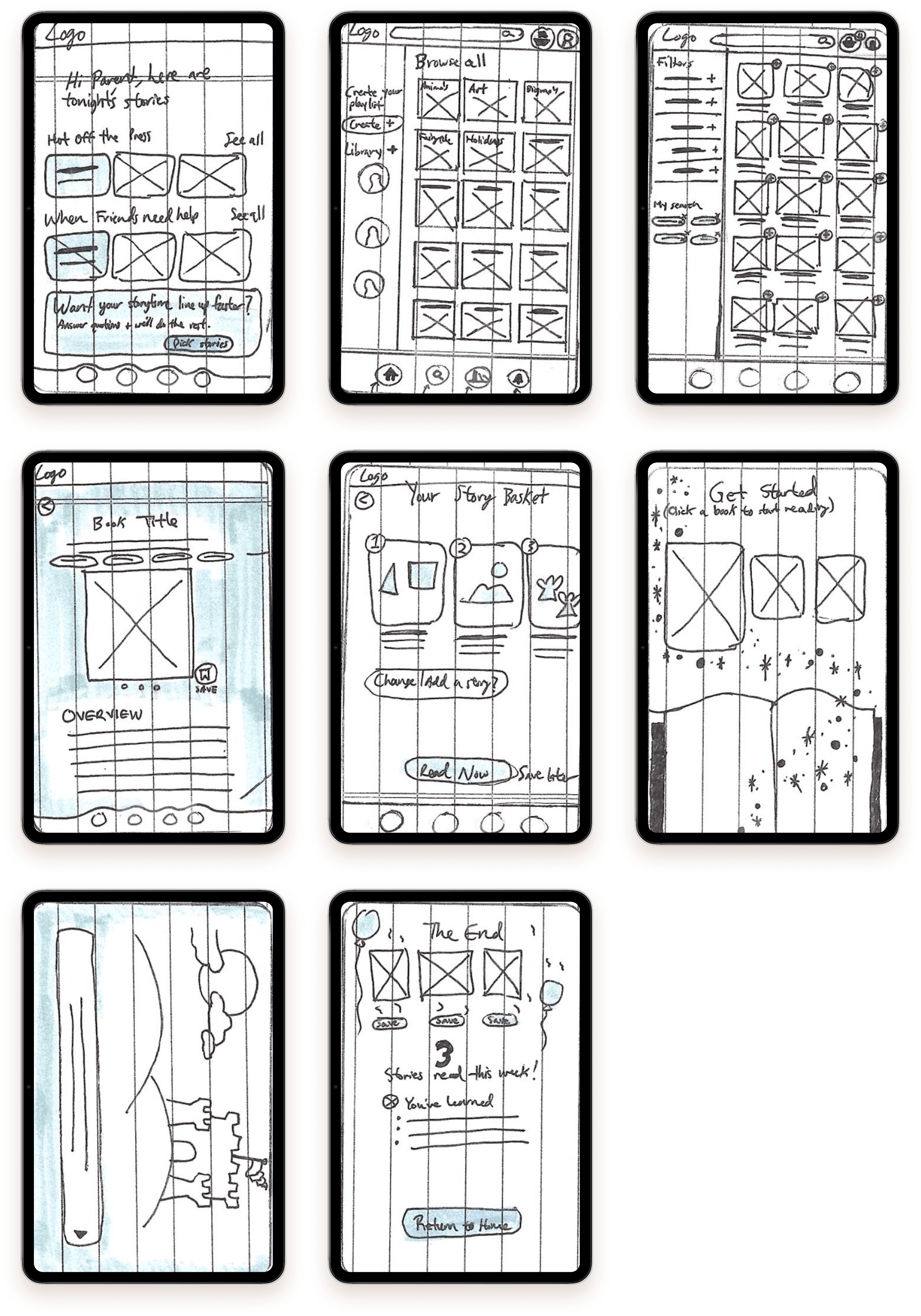
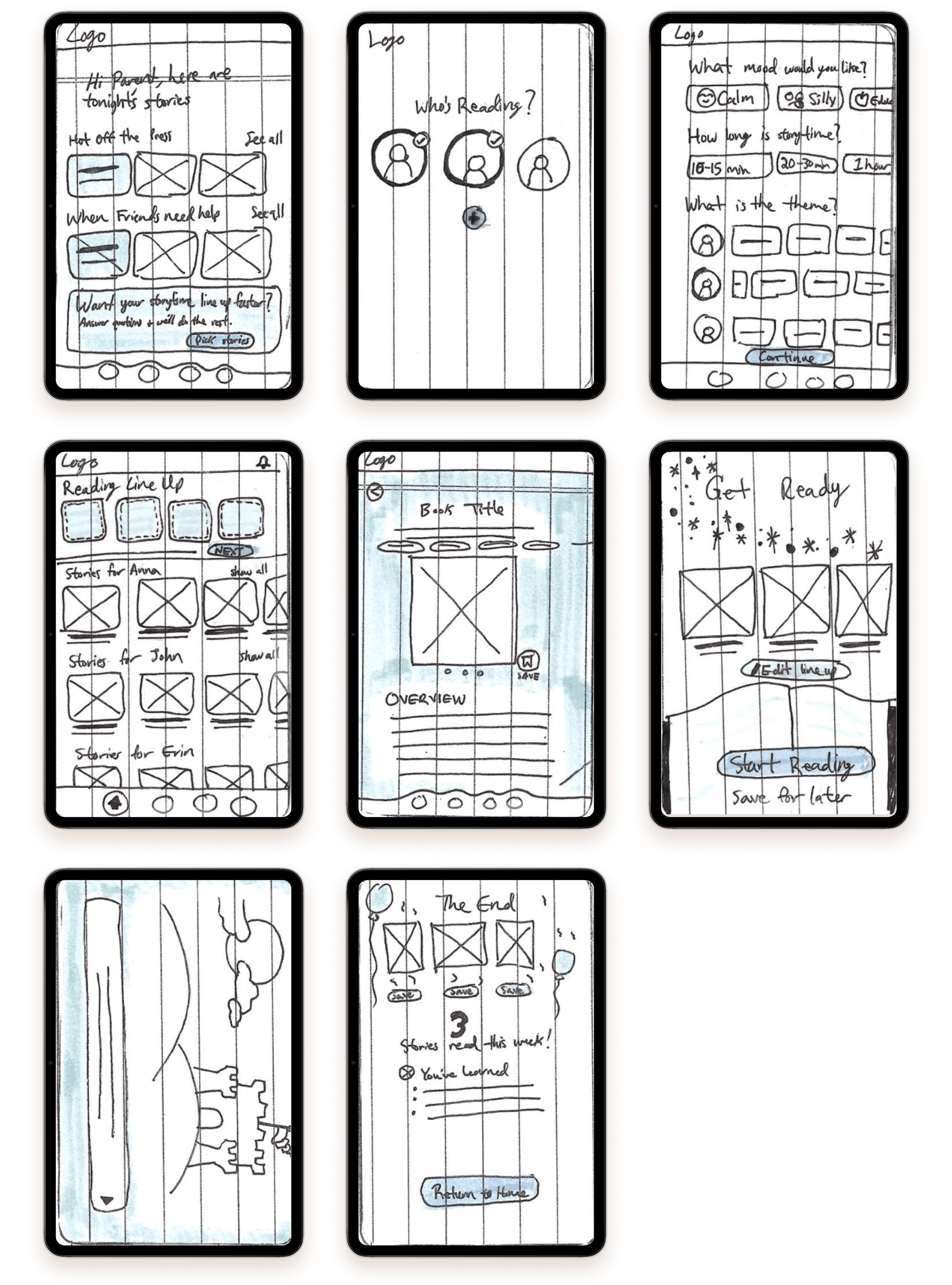
Flow 3: Session Preparation (Selected)
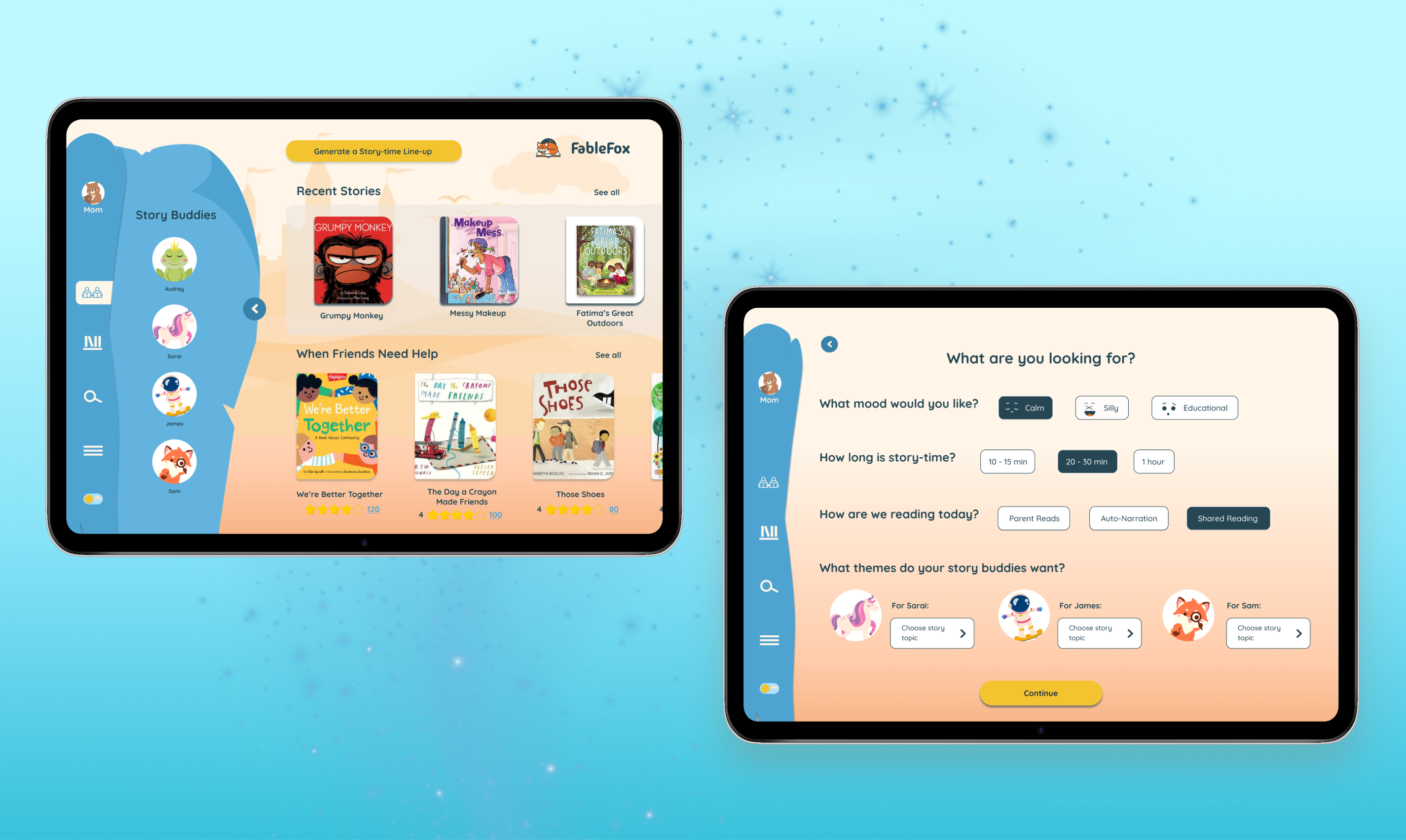
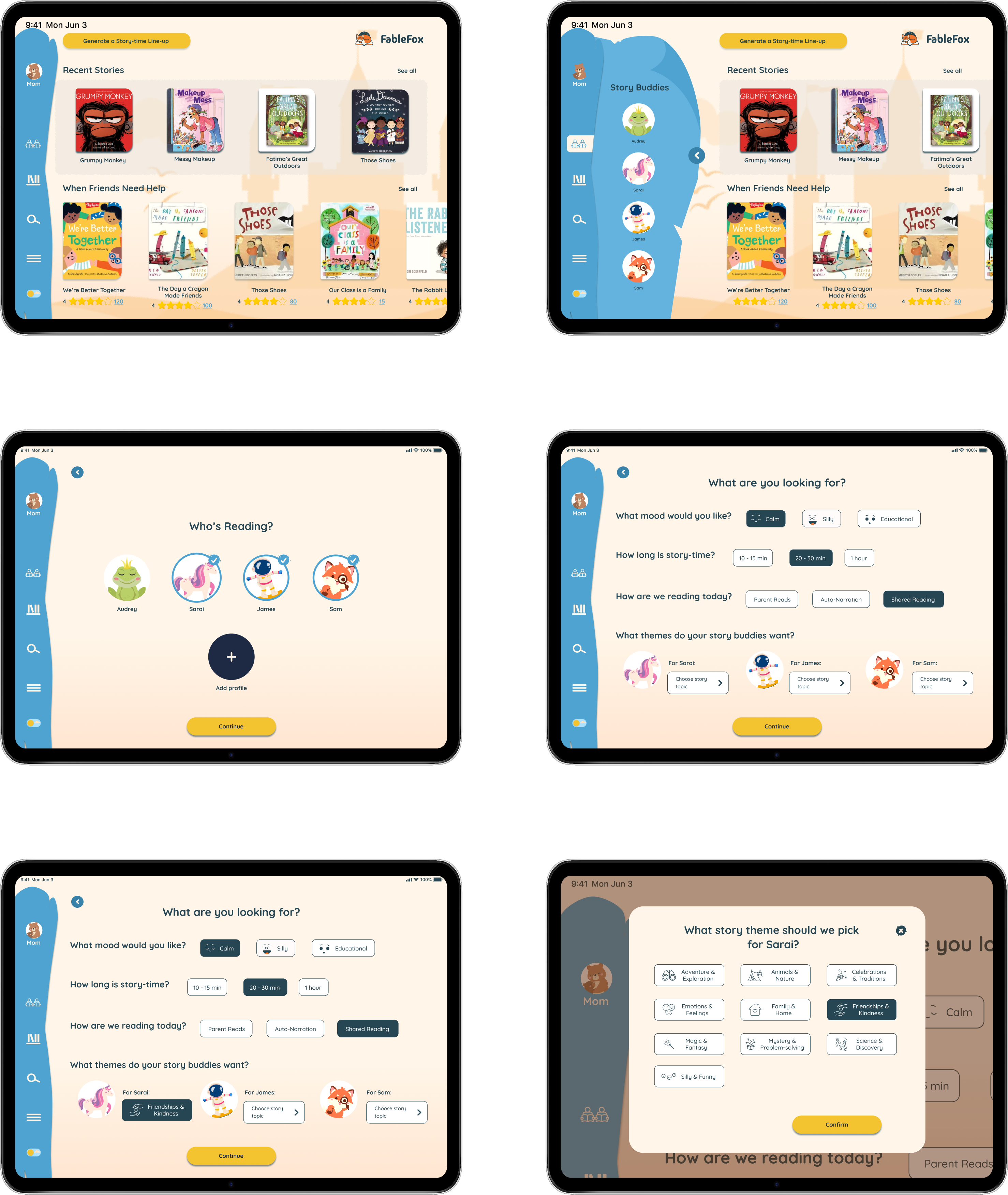
Completely reframes story discovery as preparation for a reading session. Parents move from selecting the reader, to applying simple filters, to previewing a tailored lineup. This approach proved most effective.
Color and typography designed for calm
I shaped FableFox's visual identity to feel warm, reassuring, and playful—directly supporting the emotional tone of bedtime.
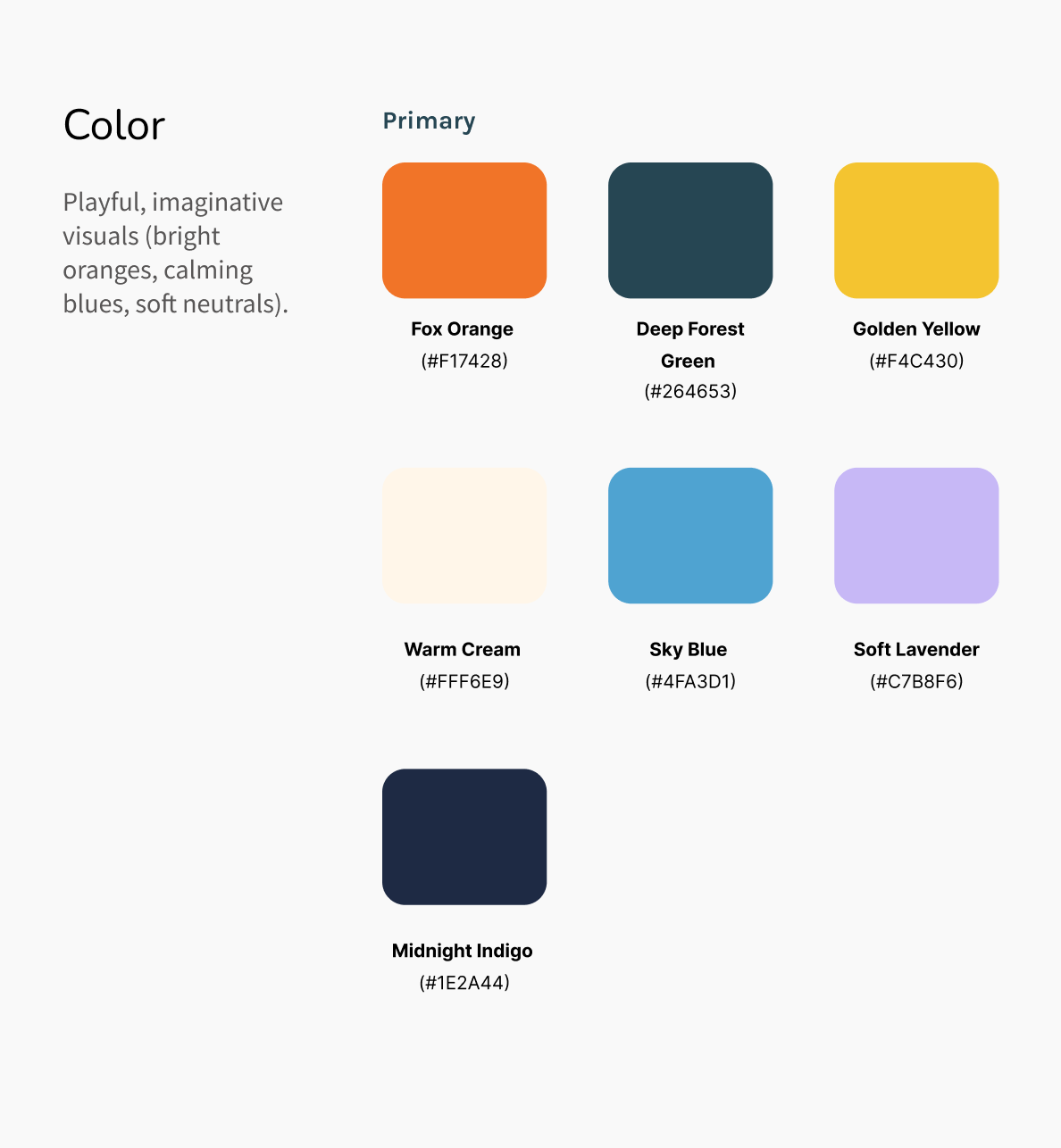
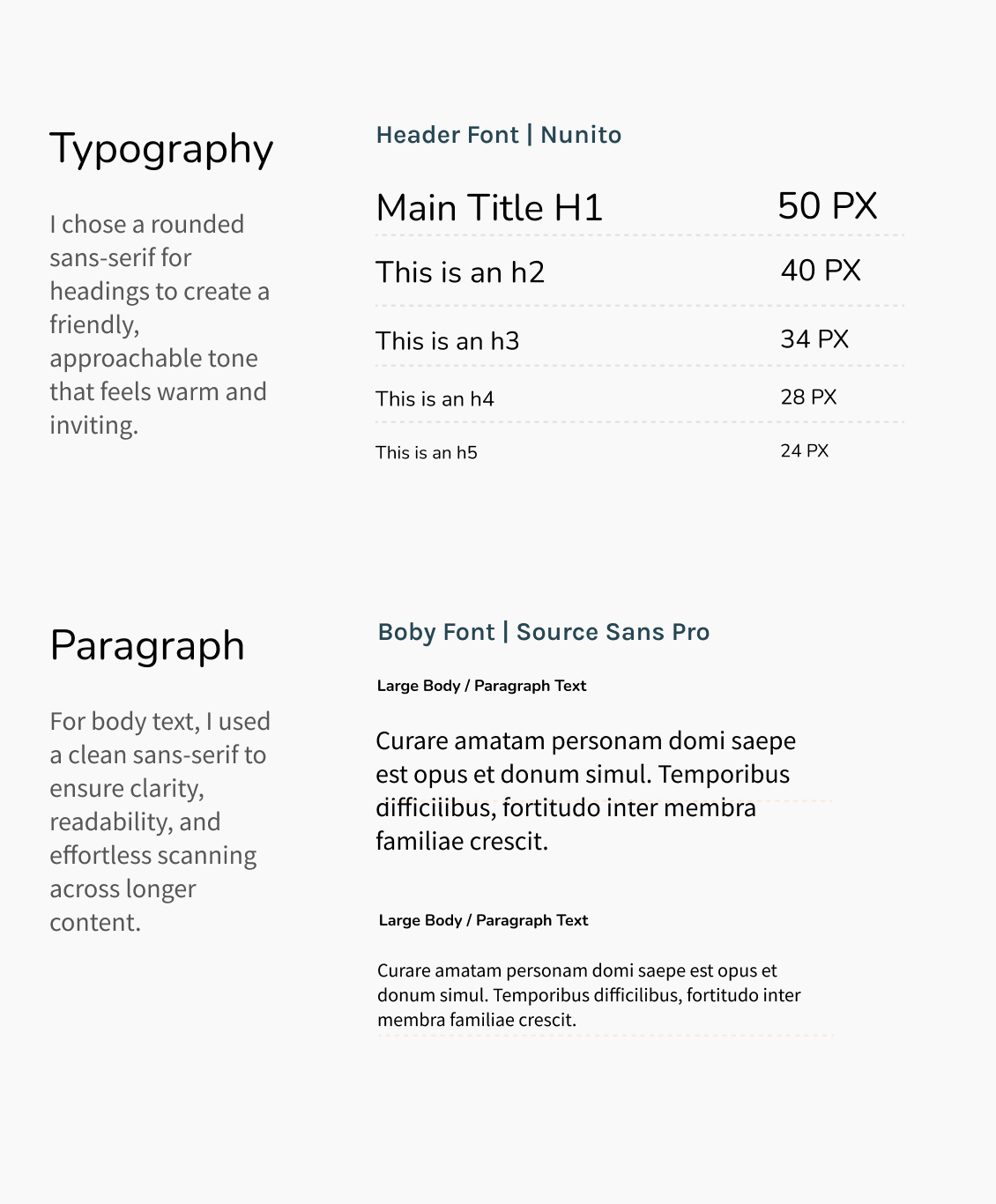
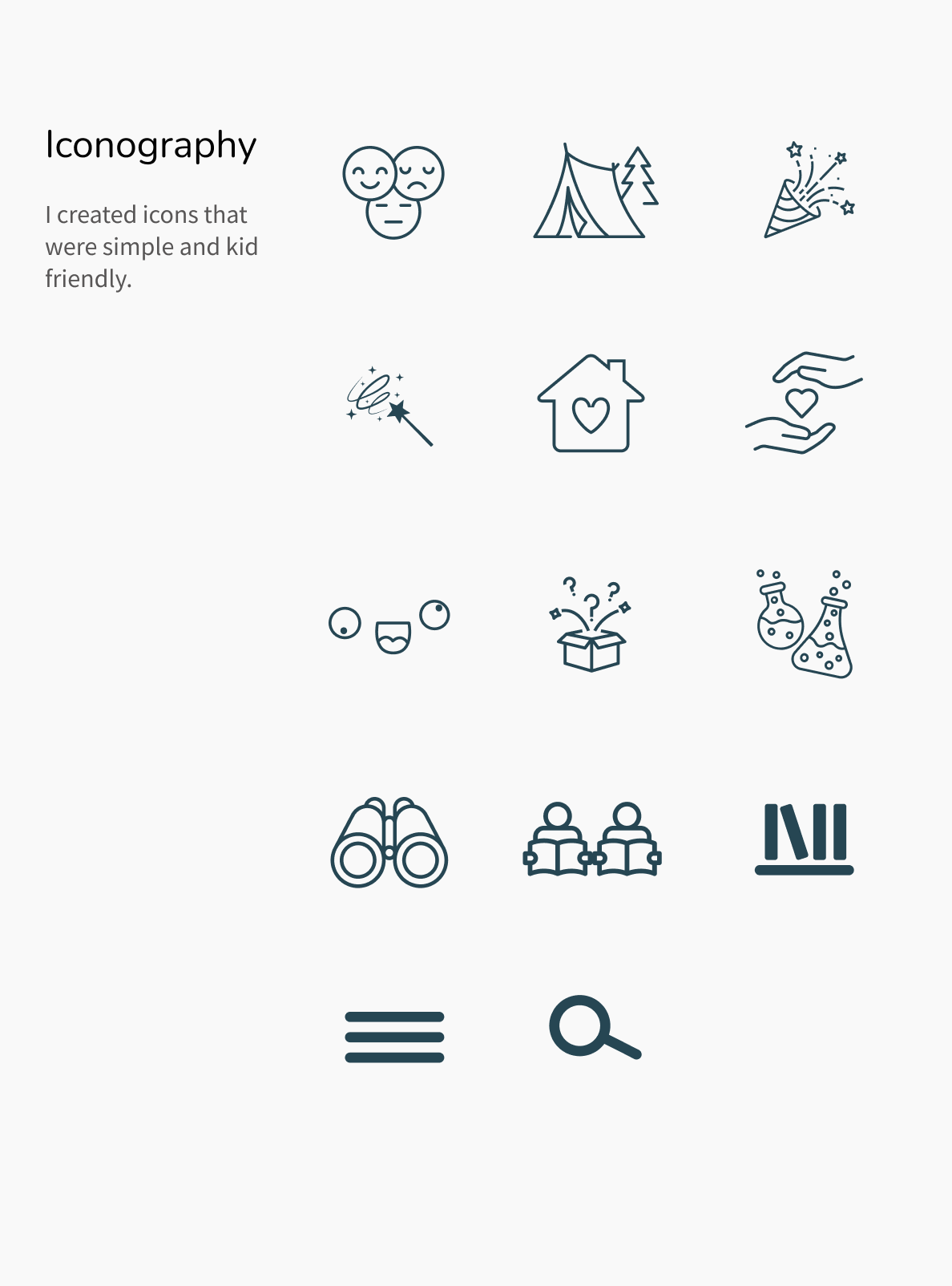
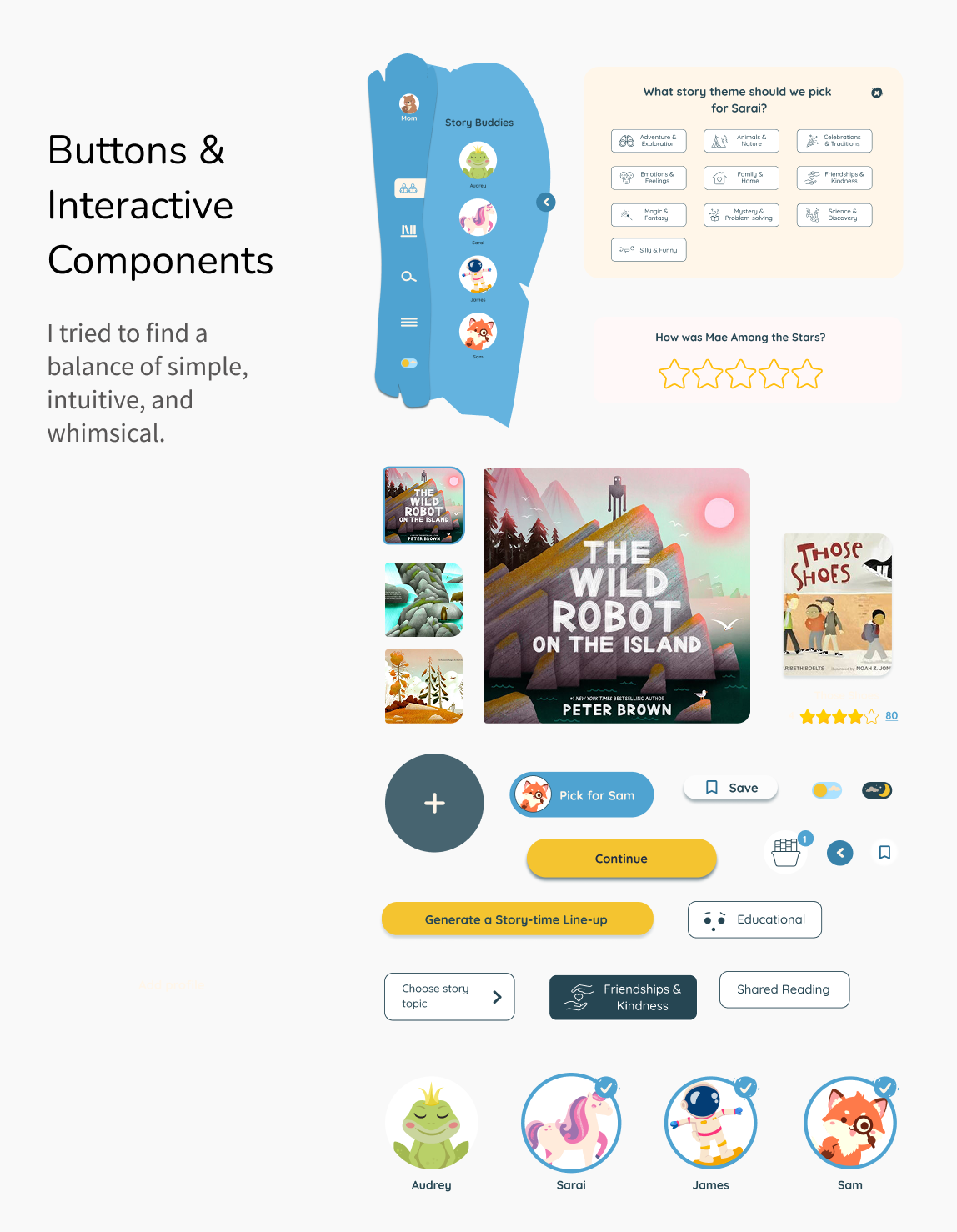
Daytime and nighttime modes for real routines
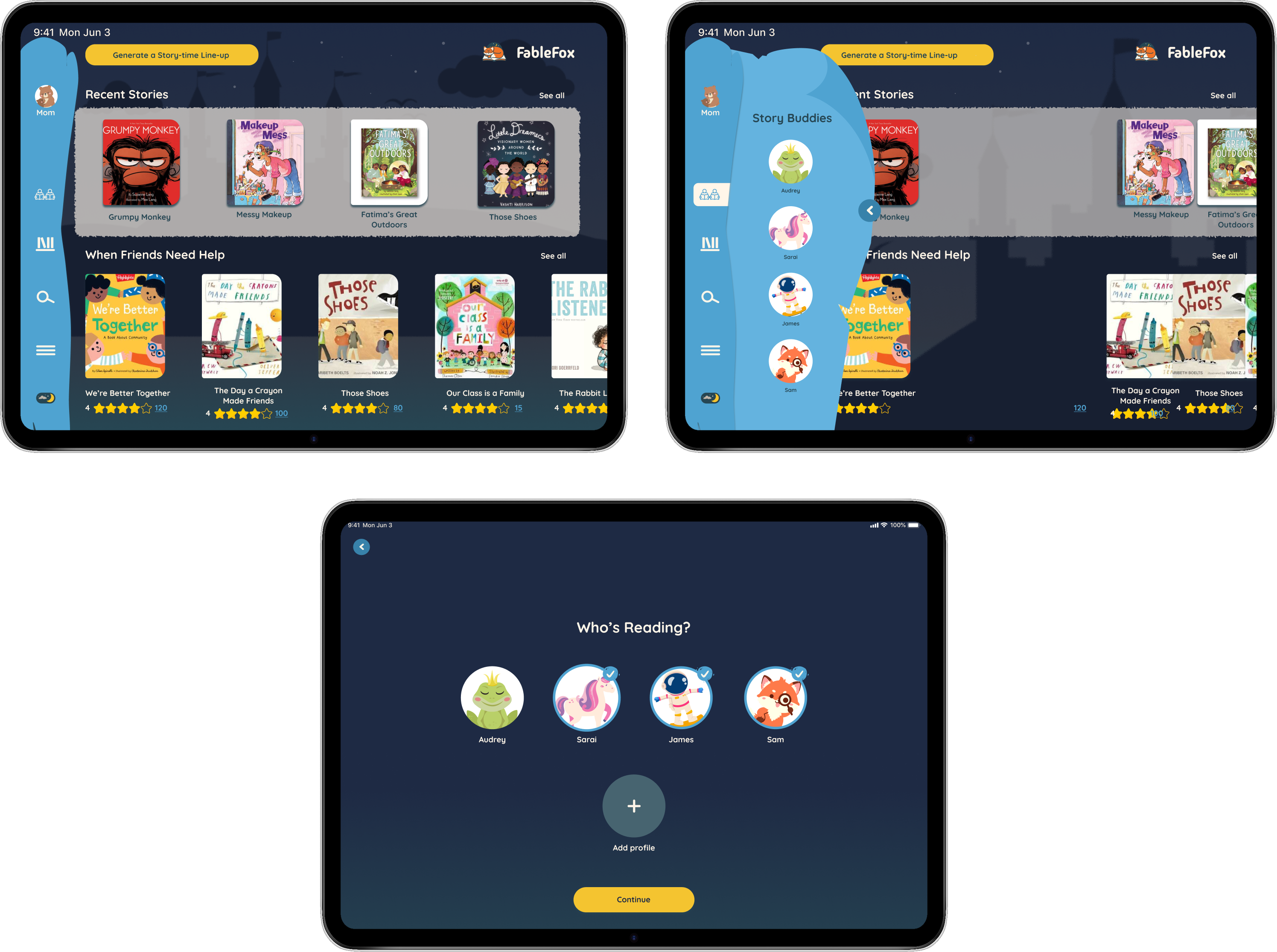
I designed a day-to-night option that blends whimsy with practicality. Switching to night mode helps parents gently signal the transition to bedtime.
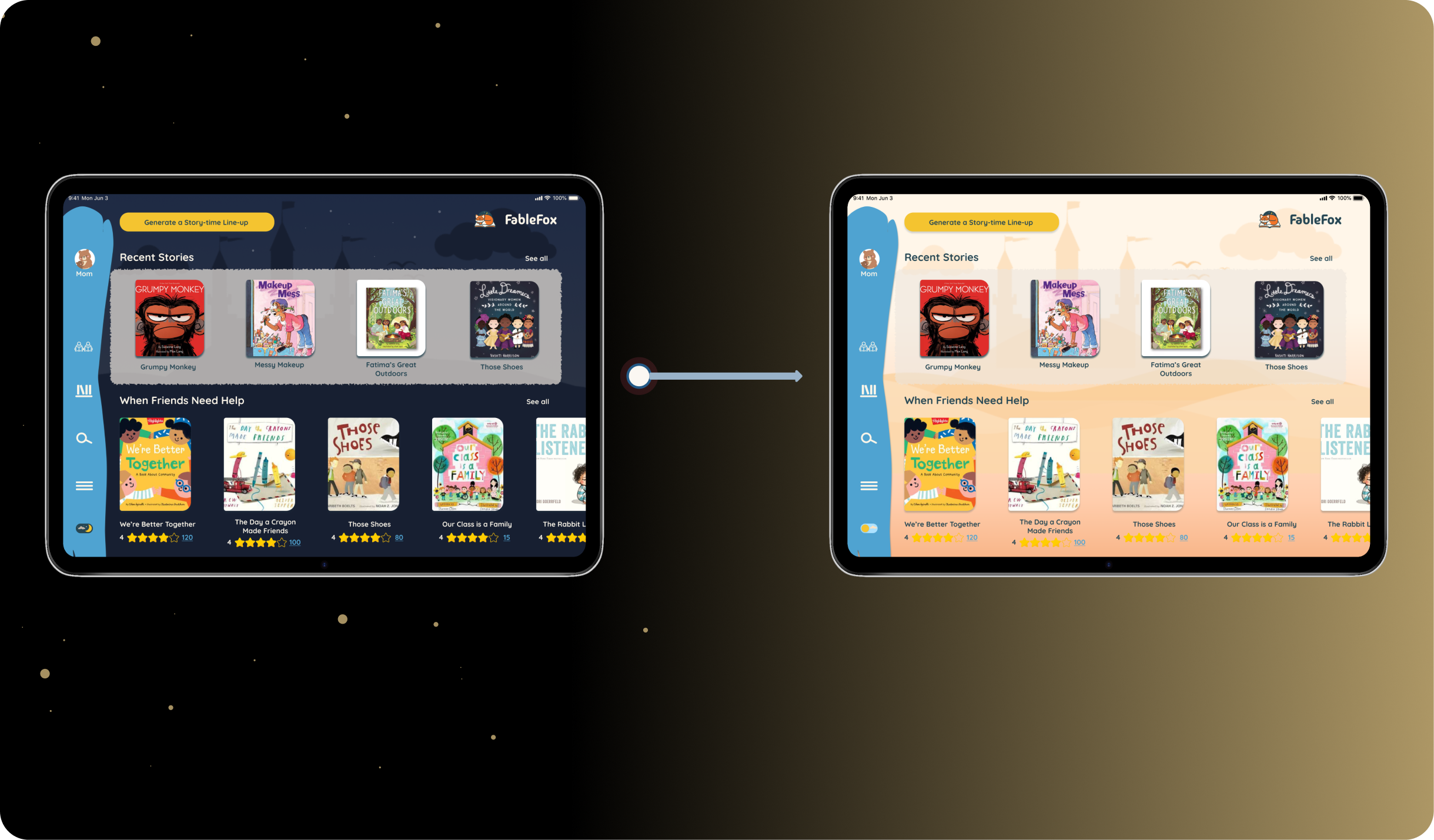
A storytime mode that shifts from browsing into preparation
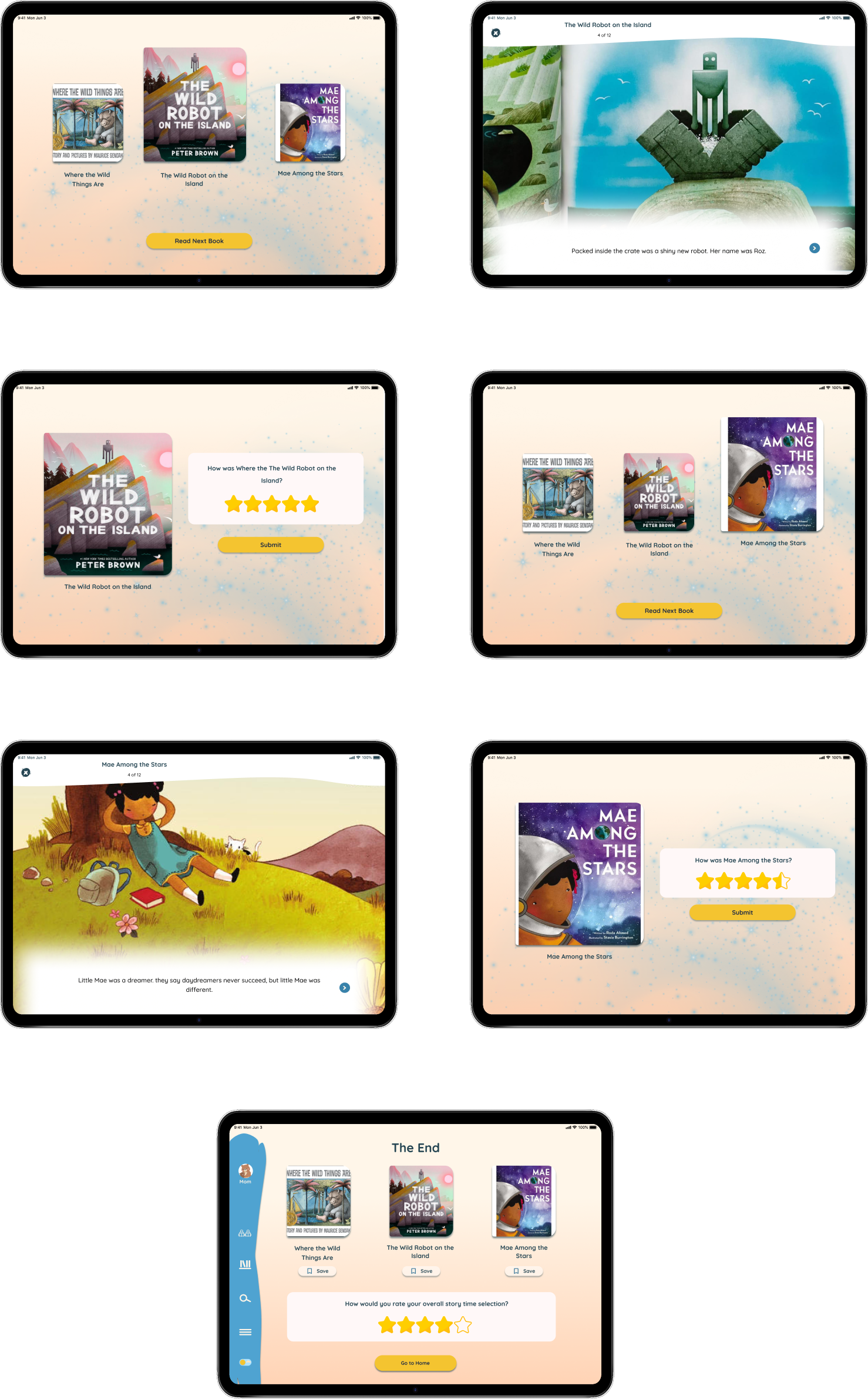
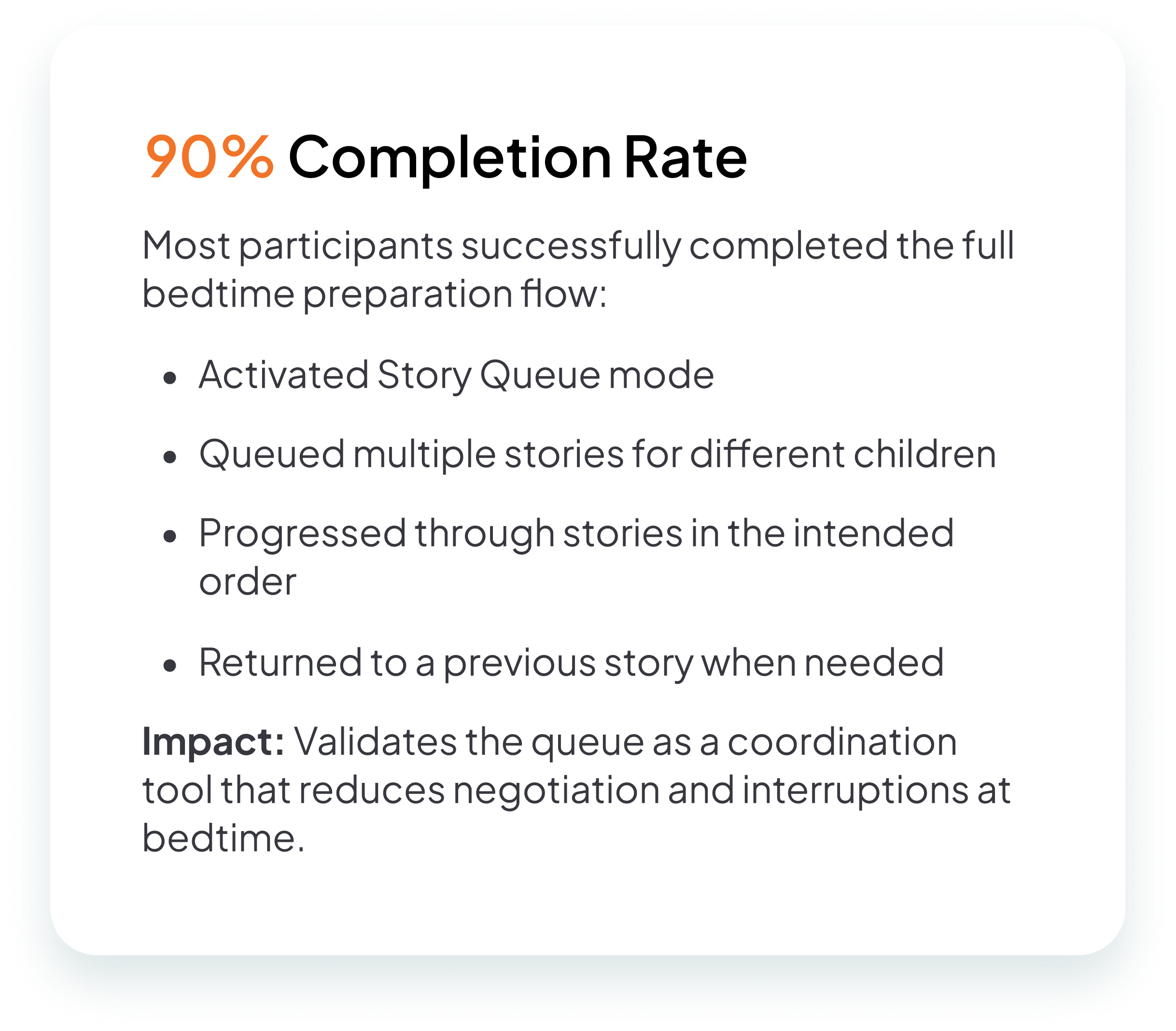
The final design introduces a Storytime mode where parents are guided to quickly assemble a short queue of stories. Once reading begins, the experience flows seamlessly through the queued stories without requiring families to stop and re-decide.
Daytime Mode
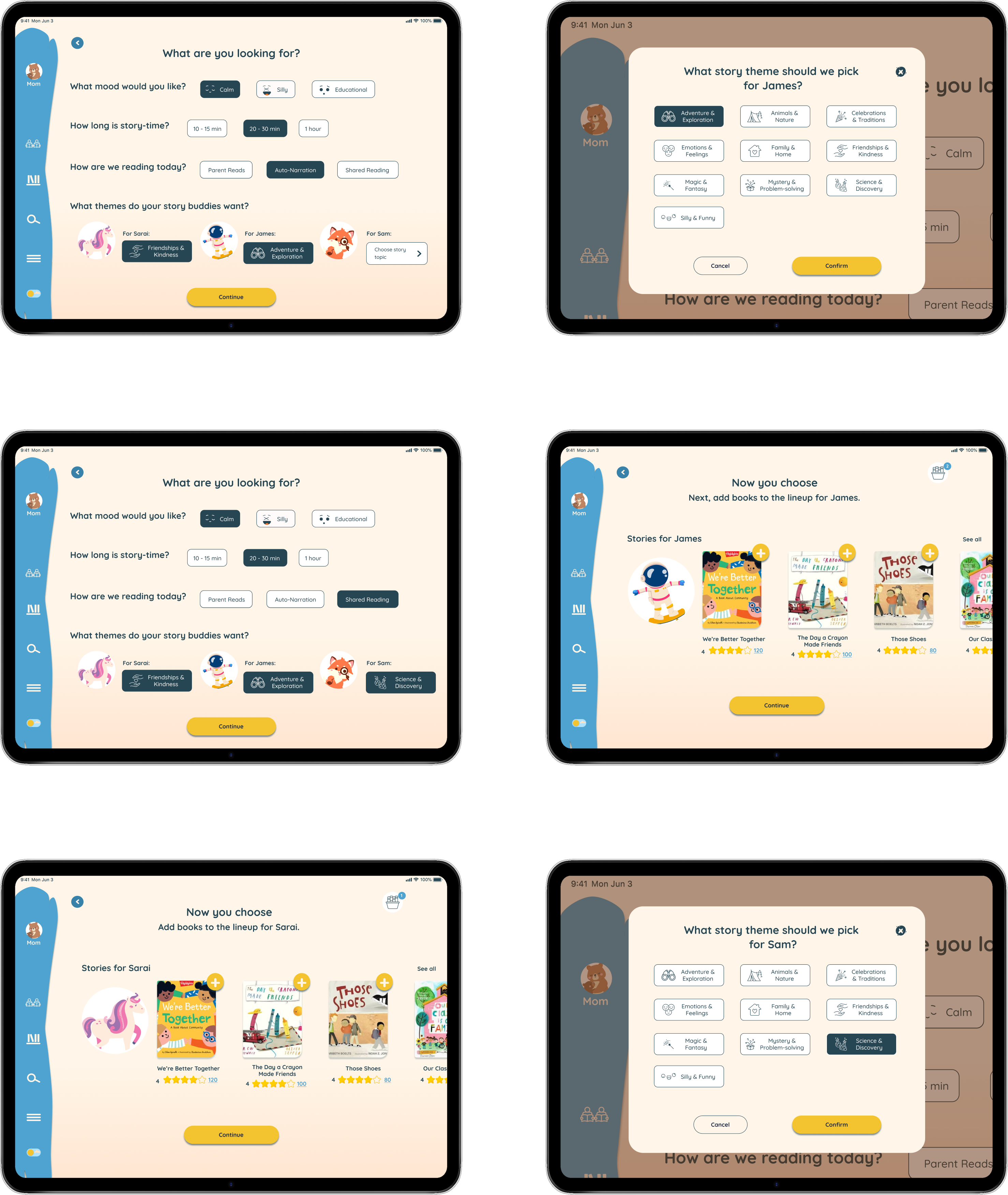
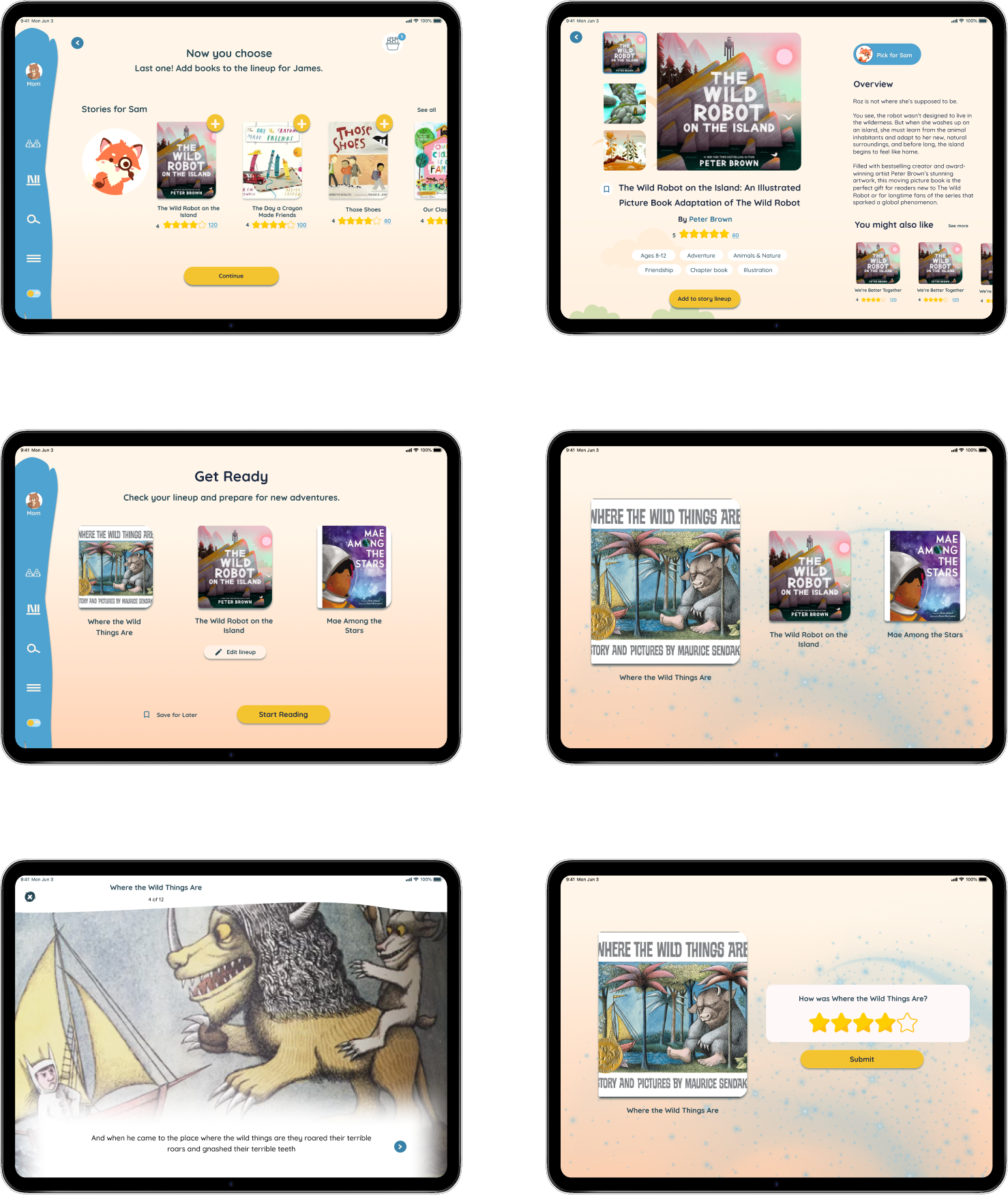
Night Time Mode
Reducing hesitation and improving confidence
I tested the experience with five participants, focusing on filters, browsing behavior, and the story queue. Testing revealed areas where language needed clarification, icons needed additional support, and multi-child functionality needed to be more explicit.
Iterating on these findings helped reduce hesitation and improve confidence. Participants moved through the flow with fewer backtracks and clearer next steps.
Stress and uncertainty replaced with confidence
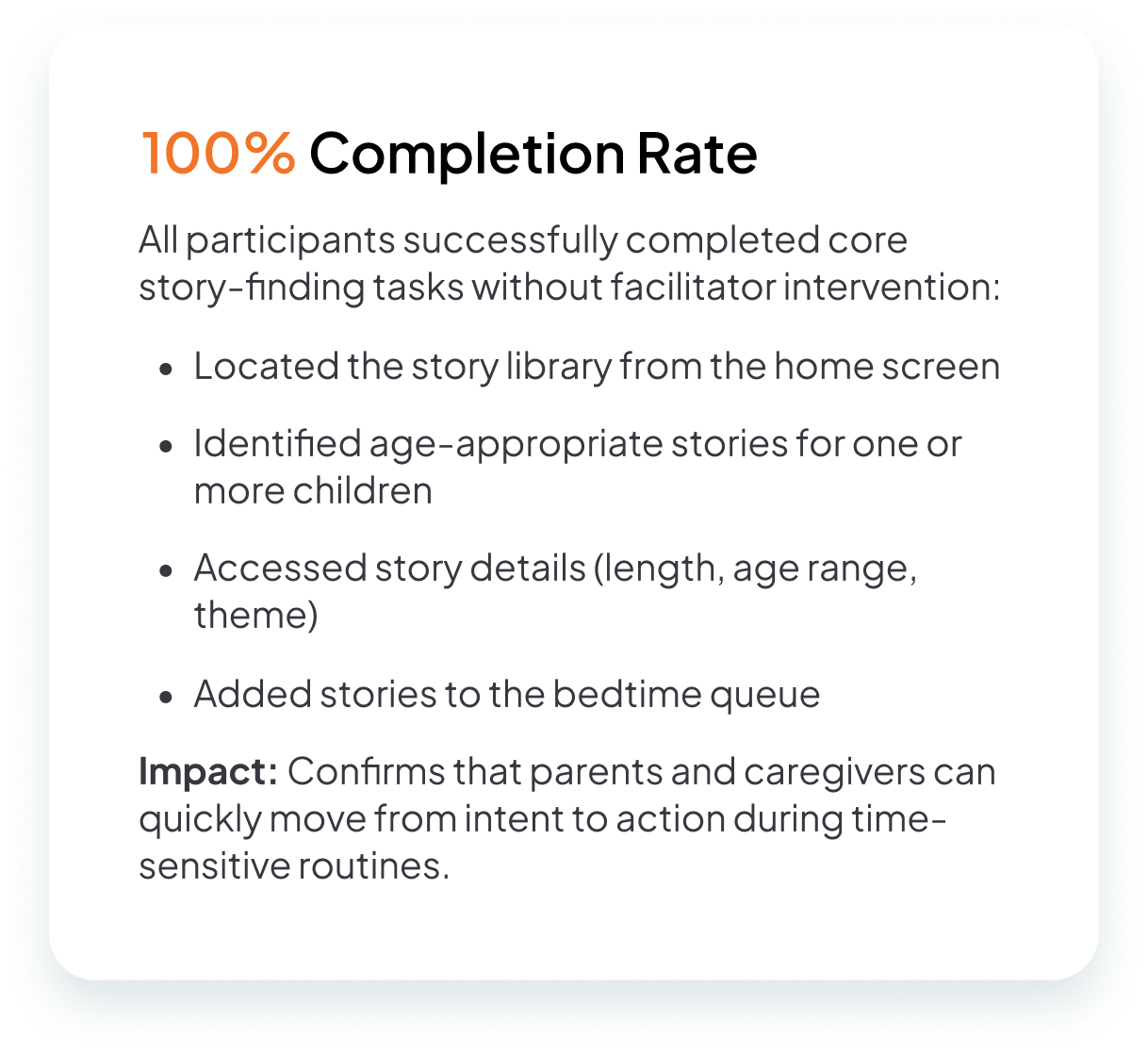
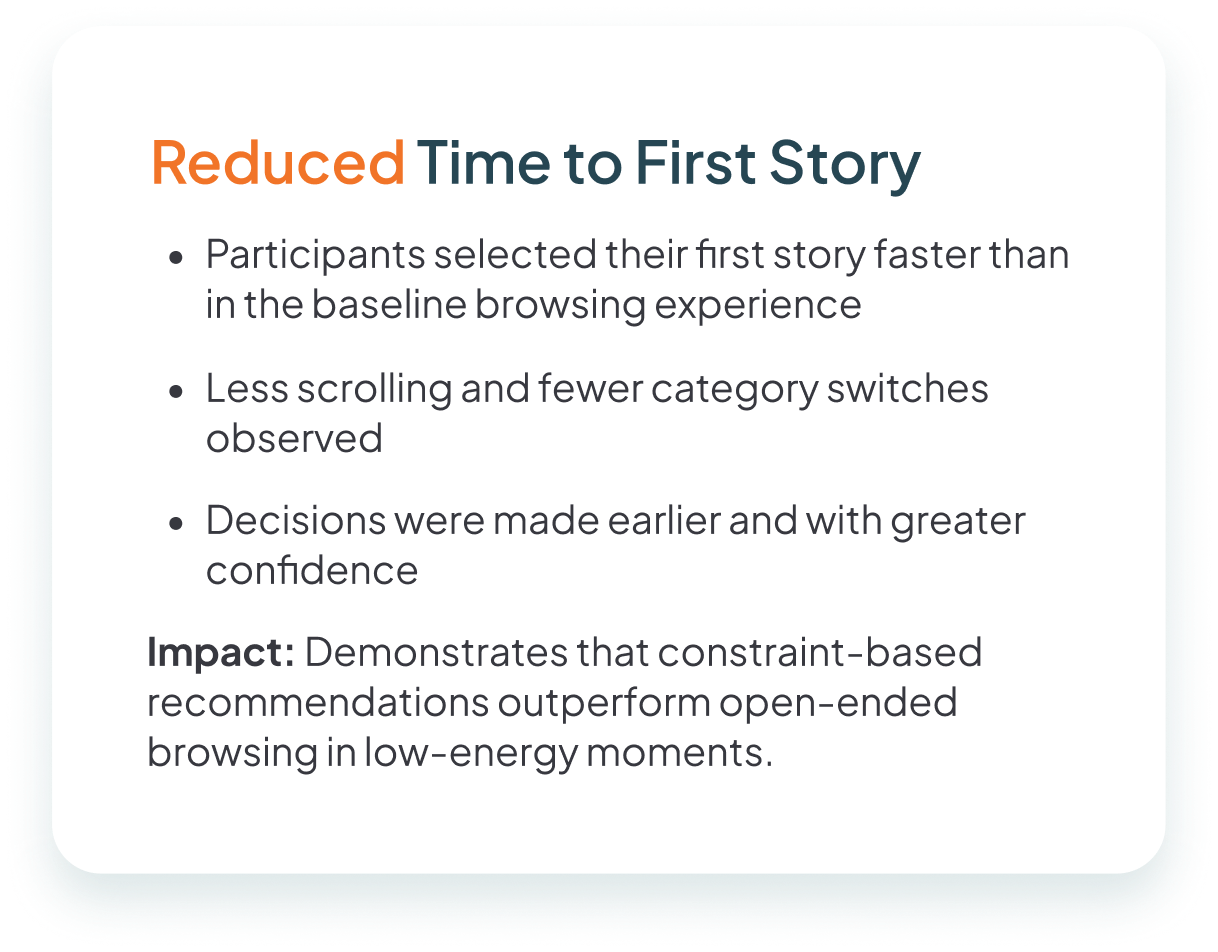
Usability testing showed strong qualitative signals of success. Participants reached reading decisions more quickly and with noticeably less second-guessing.
"This feels like I've already done the work."
Faster decisions
Participants reached reading decisions more quickly with less second-guessing.
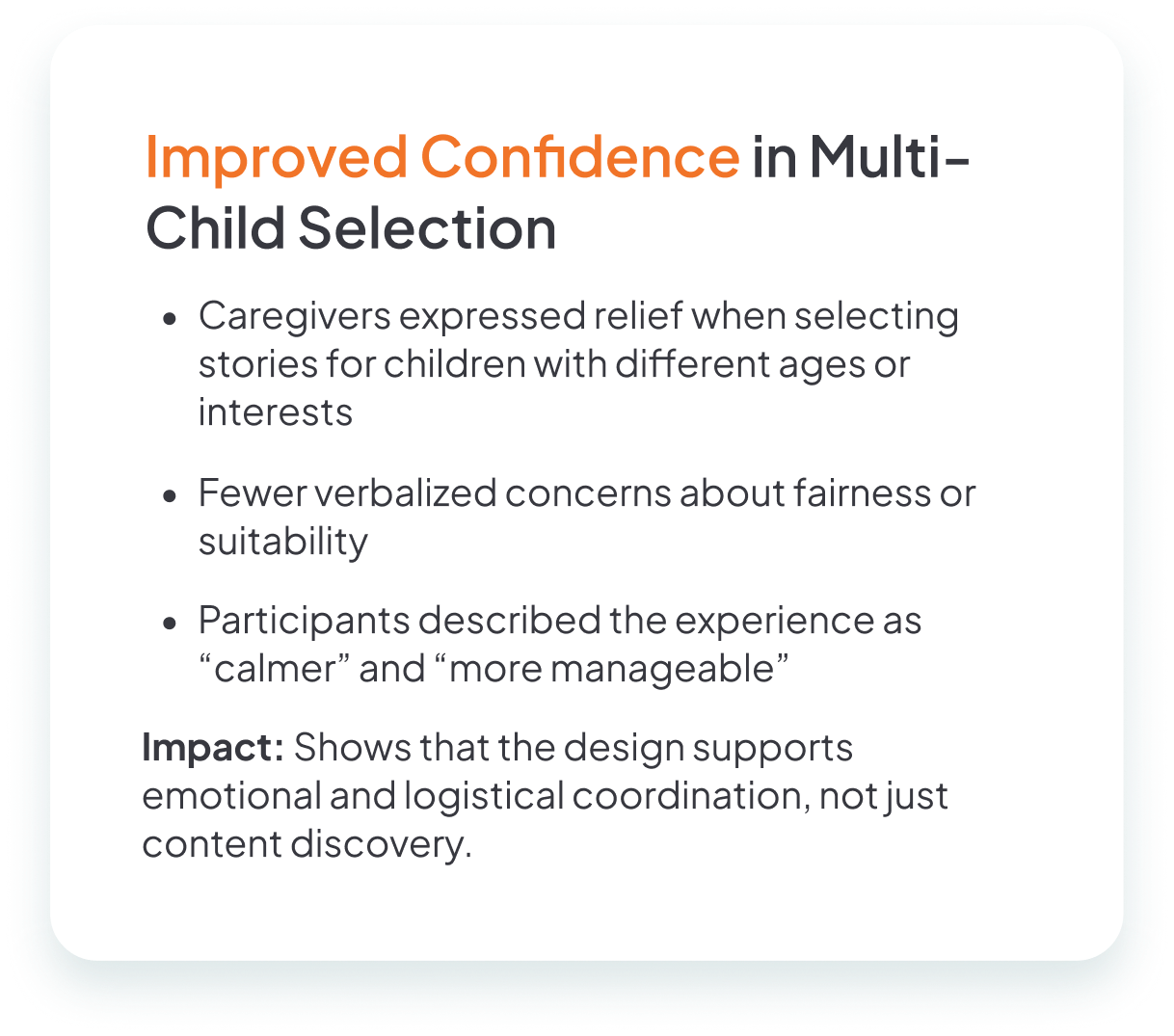
Calmer preparation
Parents described feeling calmer and more prepared before starting storytime.
Scalable library
Design allows FableFox's library to grow without overwhelming users.
Foundation for growth
Establishes a base for future personalization and multi-child use cases.
Designing for families means designing for coordination
This project reinforced that designing for families is about designing for coordination, not individuals. The most effective solutions reduce negotiation and quietly support alignment without calling attention to the system.
I also rethought my assumptions about personalization. In emotionally loaded moments, better personalization is often about timing, defaults, and framing rather than more options.
Finally, this work strengthened my confidence in using research to narrow focus and say no. Good design is often defined as much by what you remove or avoid as by what you add.