AI-powered appointment prep for patients
VisitReady is an AI-powered mobile experience that helps patients prepare for medical appointments by capturing symptoms, medications, and life events over time, then transforming them into structured visit summaries.
This app was designed during a Healthcare UX certification cohort led by Erik Shumake on Maven.
Short on time? Watch the demo video.
Early evidence that patients could understand, complete, and see value in the experience
VisitReady was designed to reduce the cognitive load of preparing for medical appointments by helping patients capture health information over time and turn it into a clear, visit-ready summary. Through usability testing and iteration, the app showed early signals that the experience was understandable, useful, and aligned with real patient needs.
Understood the app's purpose
Testers recognized VisitReady as a tool for tracking health information and preparing for doctor's visits.
Completed the primary logging flow
Users could successfully enter a symptom, medication update, or health note without guidance.
Said the visit summary would help them feel more prepared
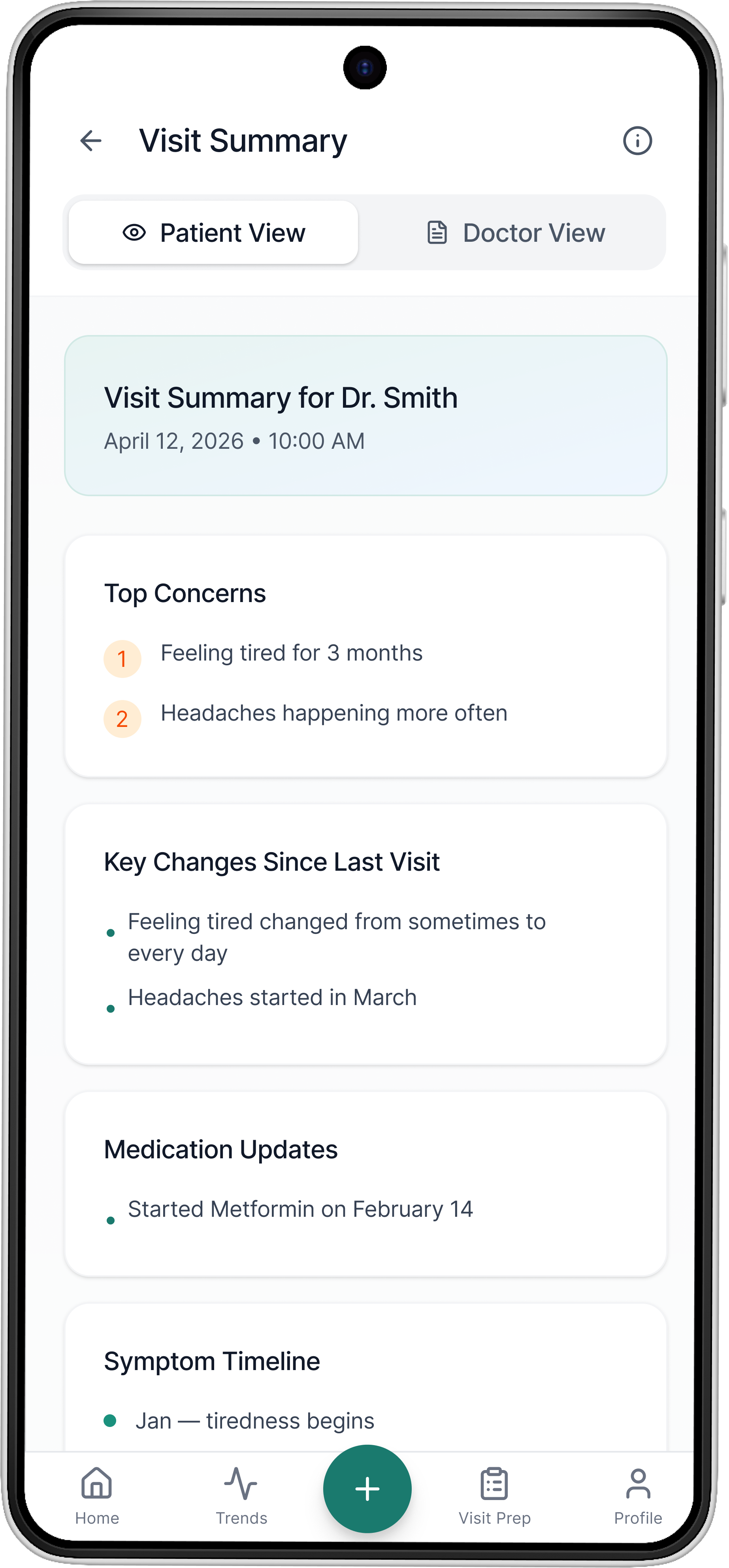
The AI-generated summary helped users see how everyday tracking could support future clinical conversations.
Health information types consolidated into one summary
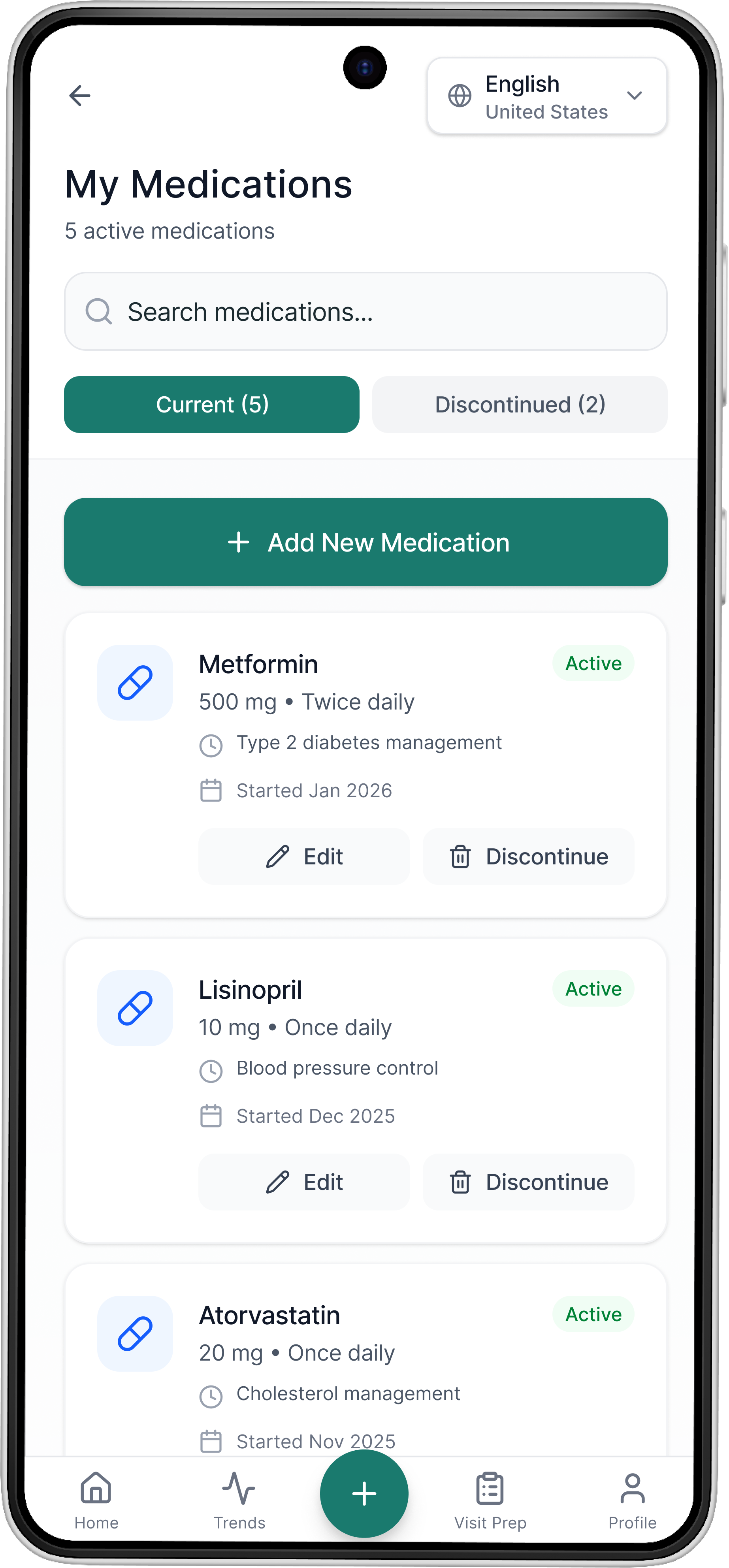
Symptoms, medications, life events, and AI insights brought together into one appointment-ready view.
These outcomes showed that VisitReady's value was not just in tracking health information, but in helping patients turn scattered, hard-to-recall details into something useful before a time-constrained appointment. The strongest signal was that users understood why the app mattered: it helped them feel more prepared, more organized, and more confident walking into a healthcare conversation.
Doctor visits move fast. Health happens in between.
Every year, billions of doctor visits happen around the world, yet most of those conversations start the same way:
"So... what's been going on?"
For patients managing chronic conditions, this burden is even greater. They are not just recalling a single issue, but tracking patterns over time, medication changes, and how their condition evolves day to day.
Important details get missed. Patterns go unnoticed. Patients leave appointments feeling like they were not fully understood.
VisitReady was designed to change that. It helps patients capture their health experiences over time and turn them into a clear, structured summary so they can show up prepared and have more productive conversations with their doctors.
Understanding how patients prepare
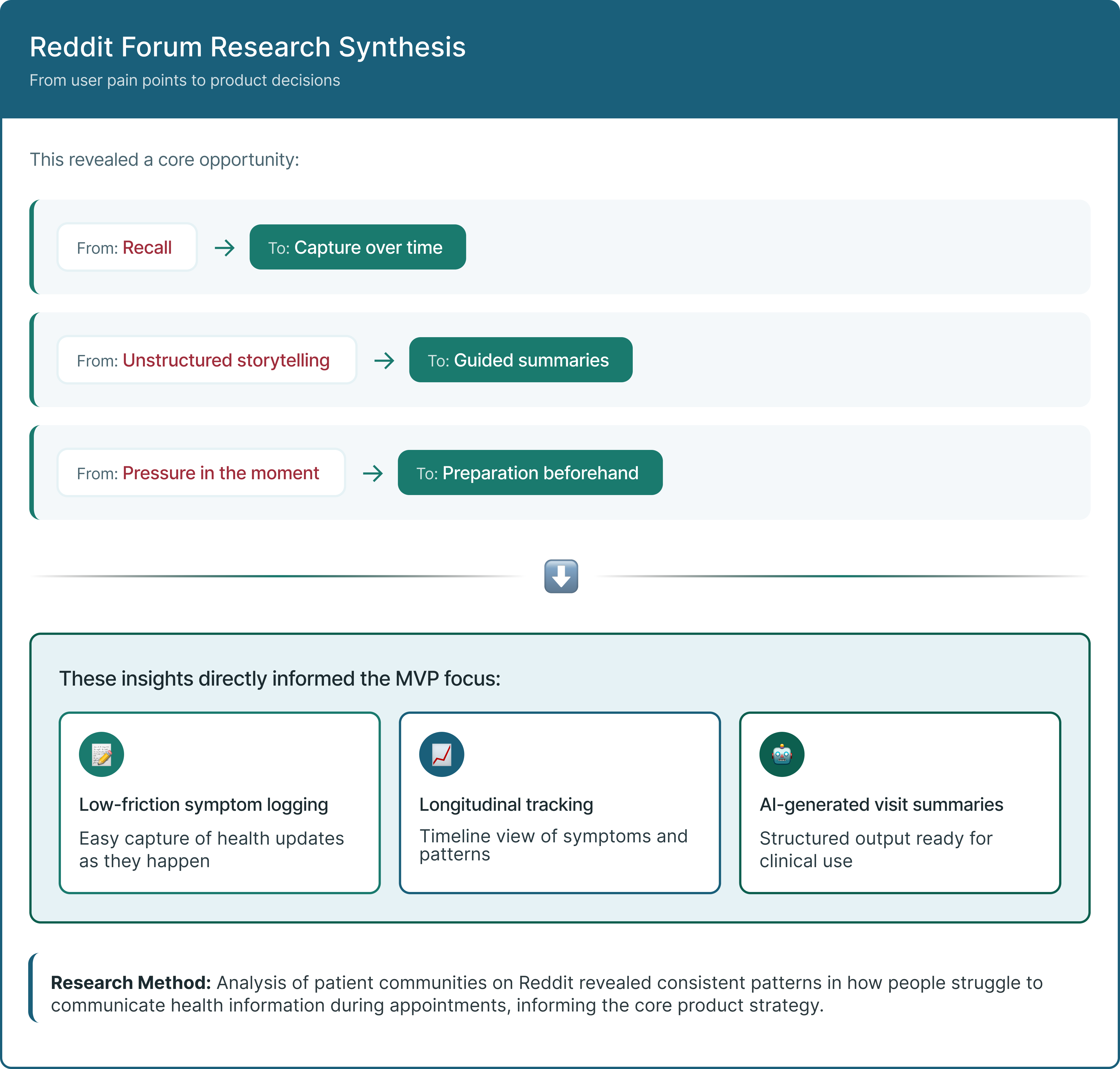
I conducted lightweight research focused on real-world behaviors, including reviewing patient discussions on Reddit forums, analyzing common frustrations, and synthesizing patterns around appointment preparation.
1. Patients rely on memory under pressure
"I always forget half of what I wanted to say once I'm in the room."
Patients summarize weeks or months of symptoms in a high-pressure environment, leading to incomplete information.
Design implication: Support capturing information over time, not just at the moment of the visit.
2. Symptom tracking feels like too much work
"I tried tracking my symptoms, but I couldn't keep up with it."
Existing tools require too much effort. Logging feels time-consuming, rigid, or easy to forget.
Design implication: Capture needs to be fast, flexible, and low-friction.
3. Patients struggle to identify what's relevant
"I don't know what actually matters to tell my doctor."
Patients are unsure which details are important, leading to over-sharing or missing critical info.
Design implication: Surface patterns and highlight what matters to reduce cognitive burden.
4. Appointments feel rushed and one-sided
"By the time I remember something, the appointment is already over."
Short appointment times create pressure, making it difficult for patients to communicate clearly.
Design implication: Prepare ahead with a structured summary for efficient communication.
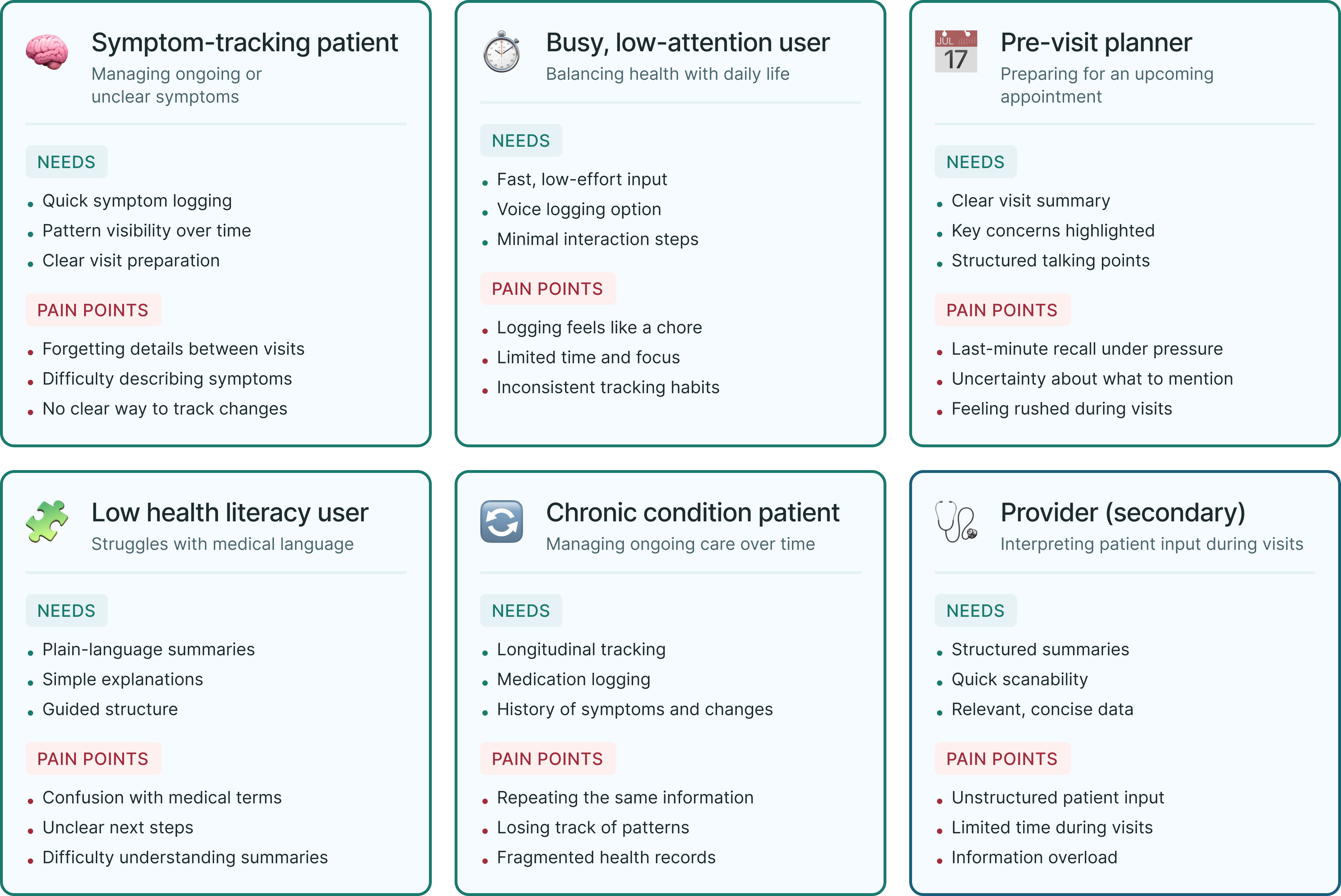
Different patients, different needs
The appointment prep problem shows up differently depending on the patient. I defined core user groups to ground the design in real behaviors and support different needs across the care journey.
What if patients could arrive with their story already organized?
VisitReady was designed to reduce the burden on patients before appointments. Instead of relying on memory in the exam room, users can track health experiences as they happen and generate a structured visit summary.
The core principle: Reduce effort at the moment of capture. Increase clarity at the moment of care.
An AI-powered tool for low-friction health tracking
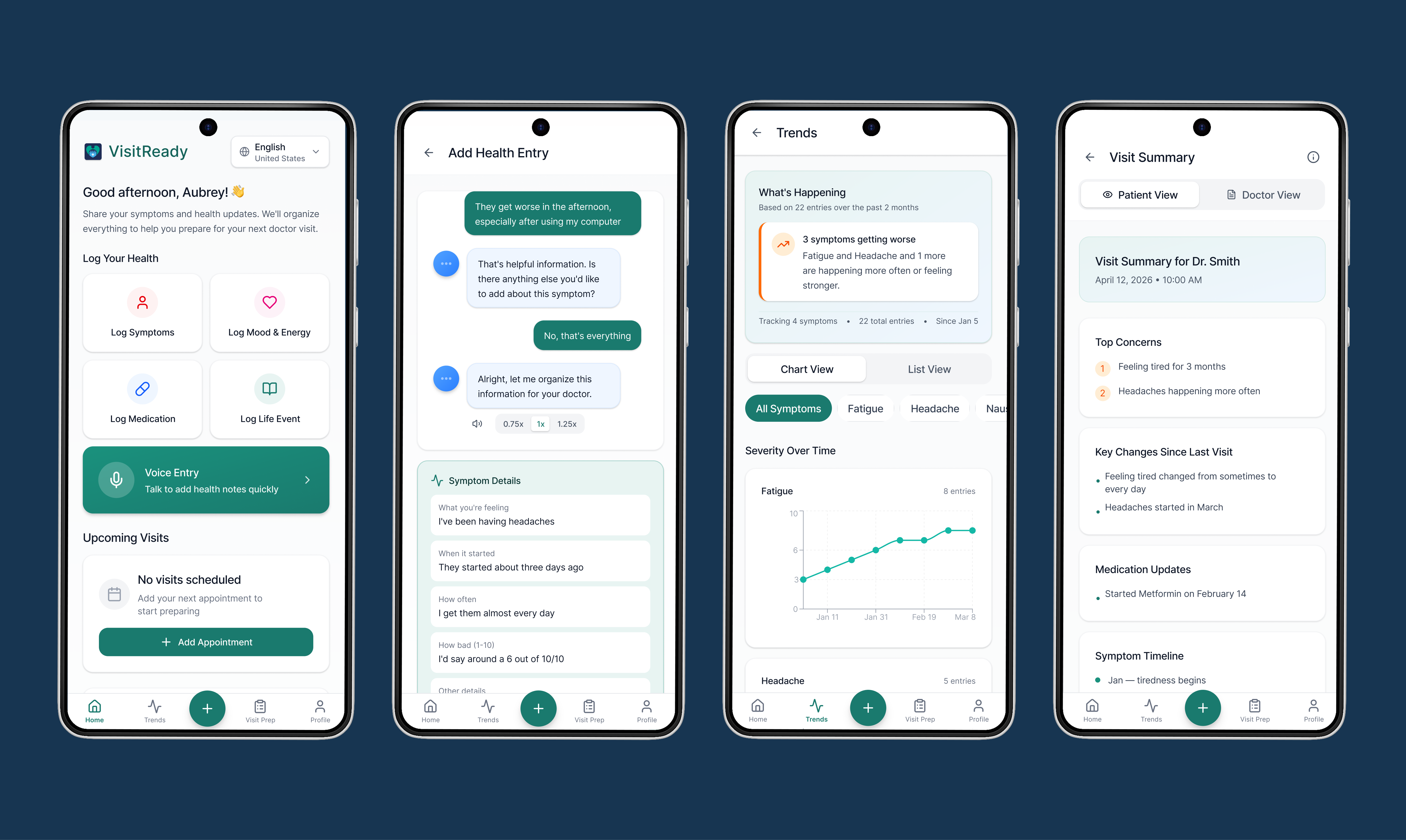
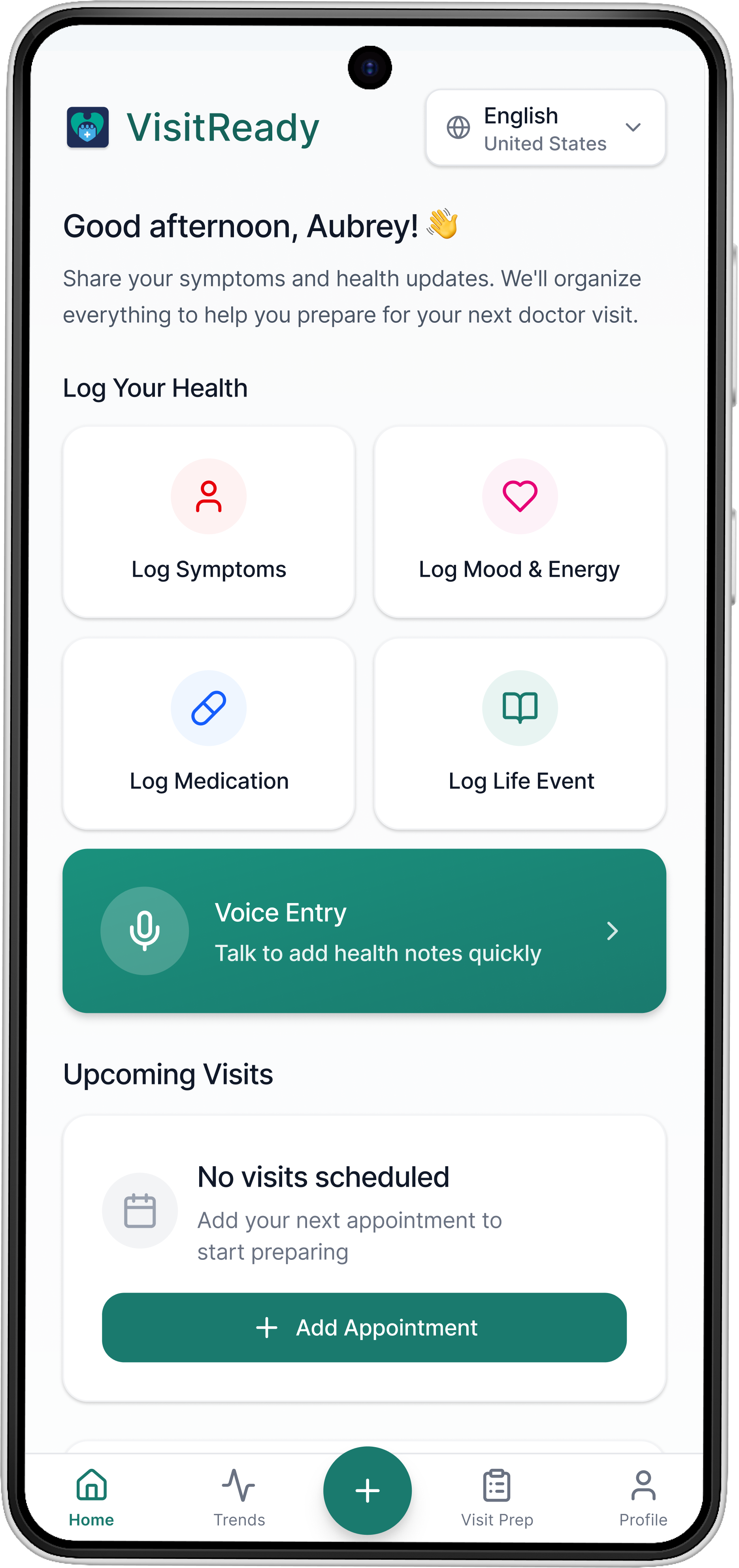
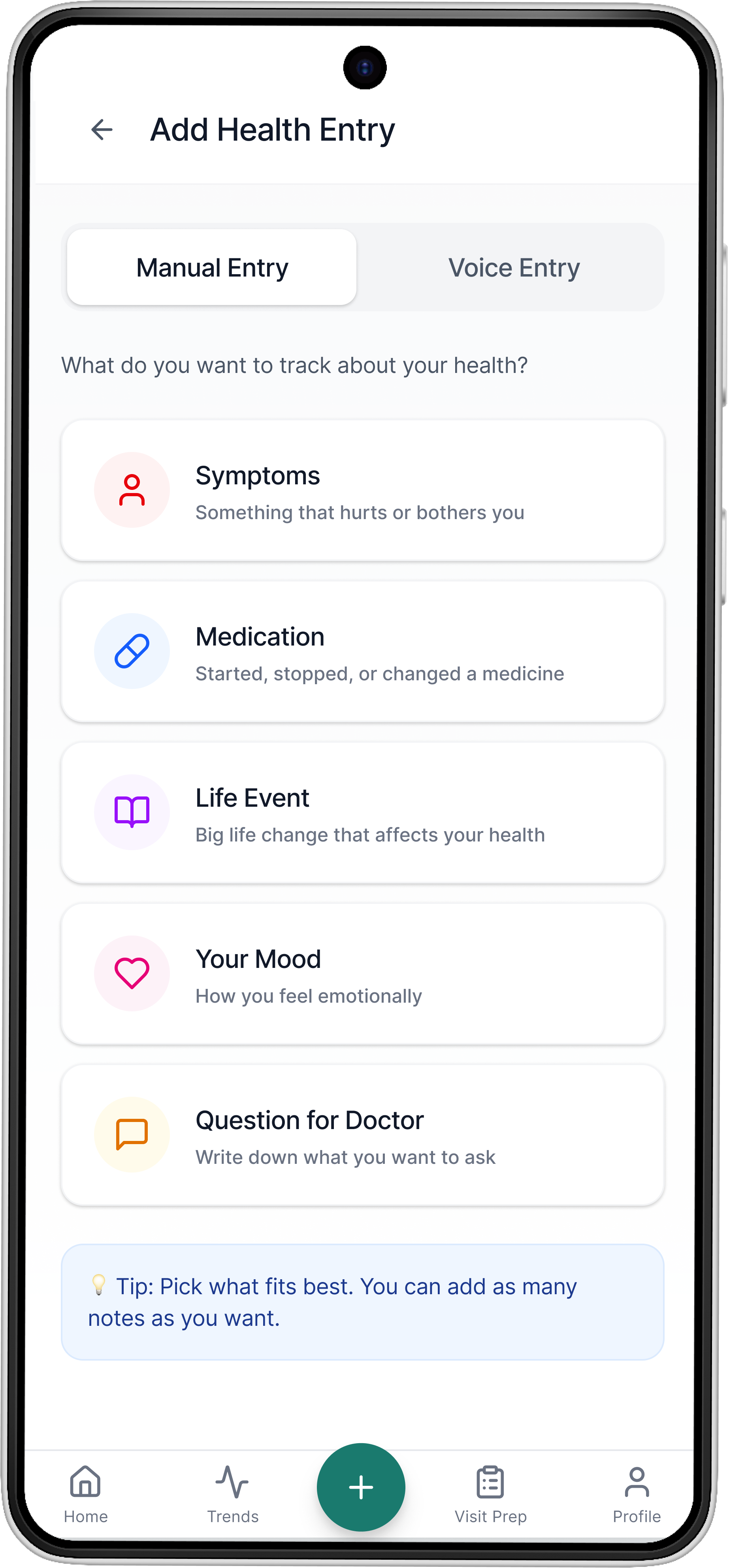
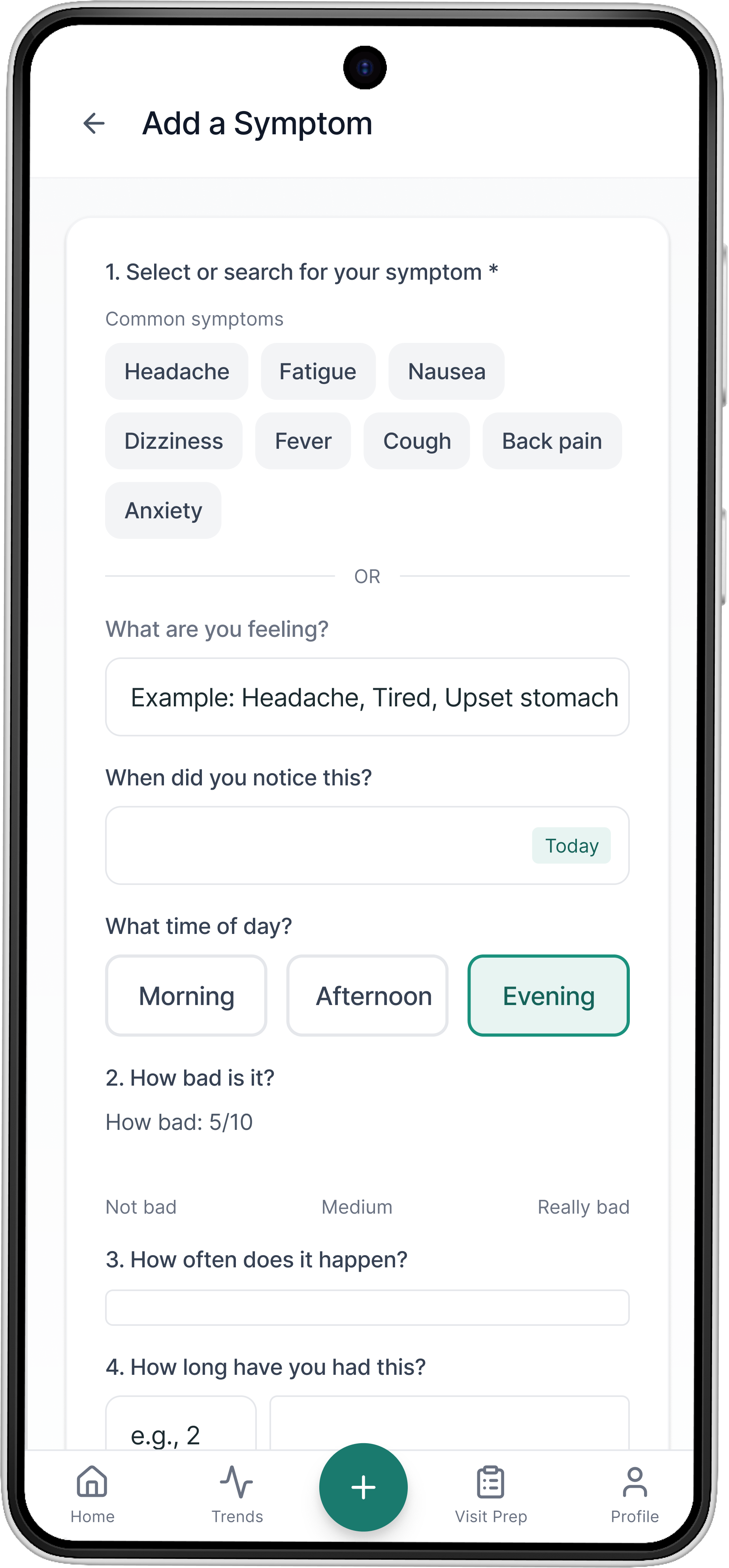
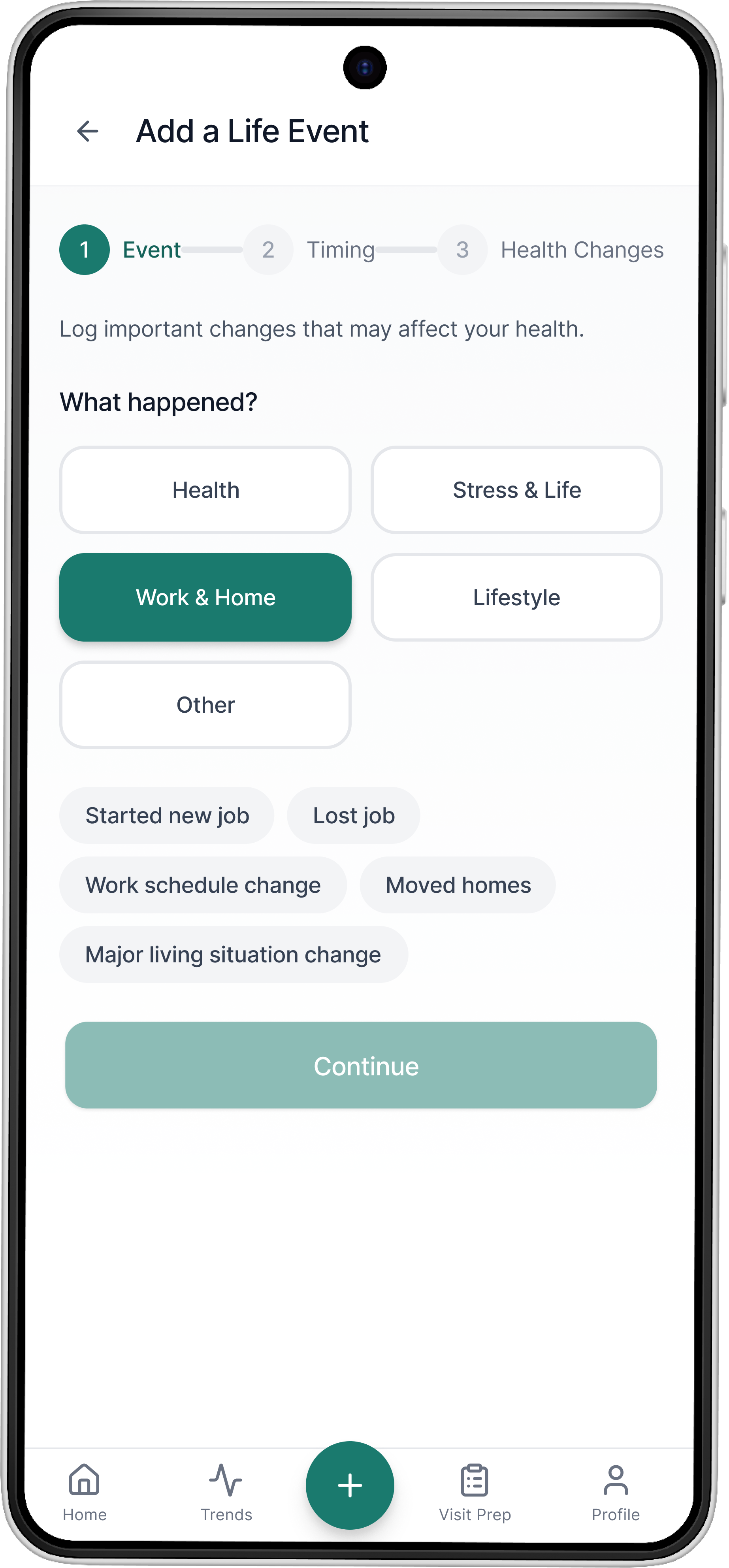
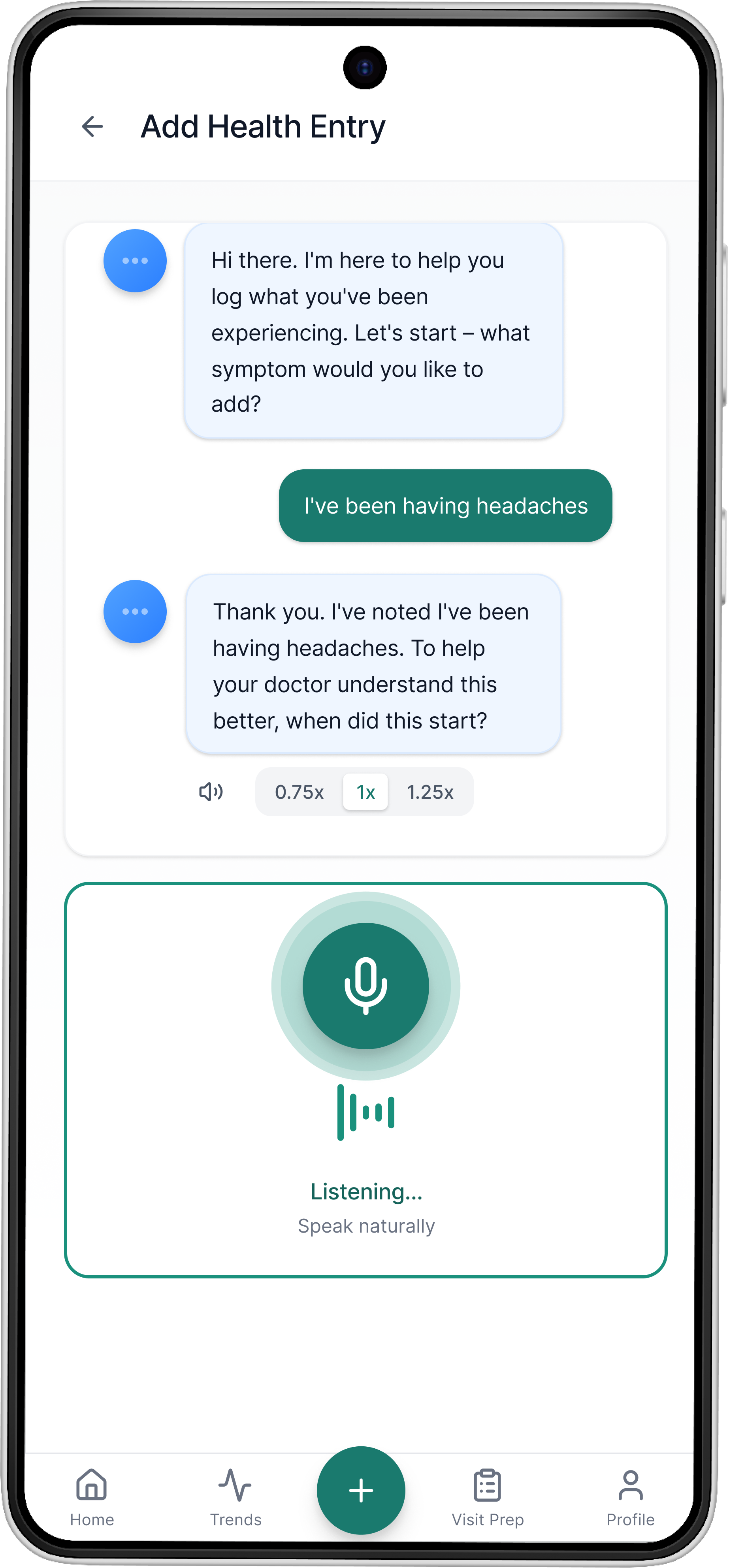
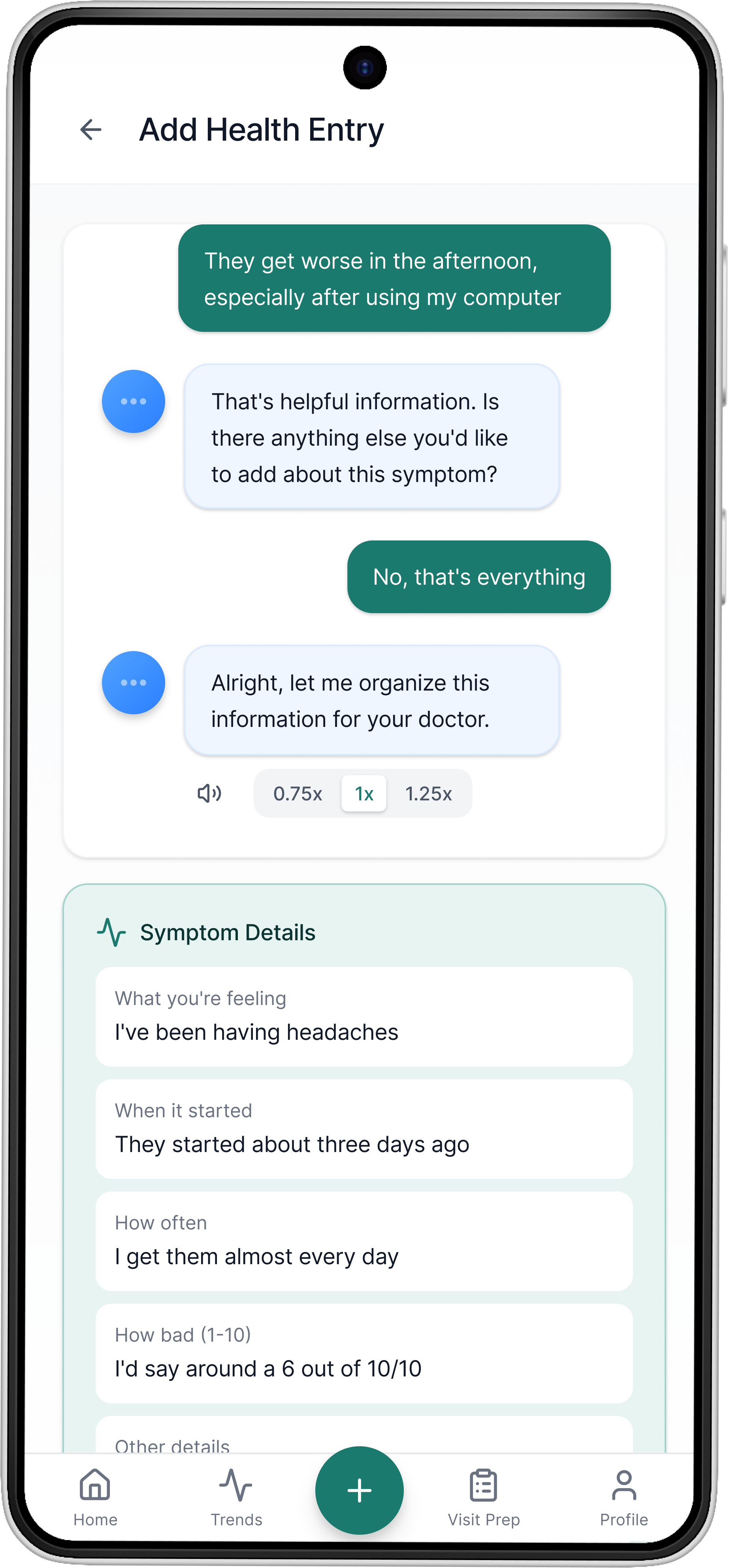
VisitReady helps users quickly record symptoms, medications, mood, and major life events. It includes voice input, allowing users to speak naturally instead of typing everything manually.
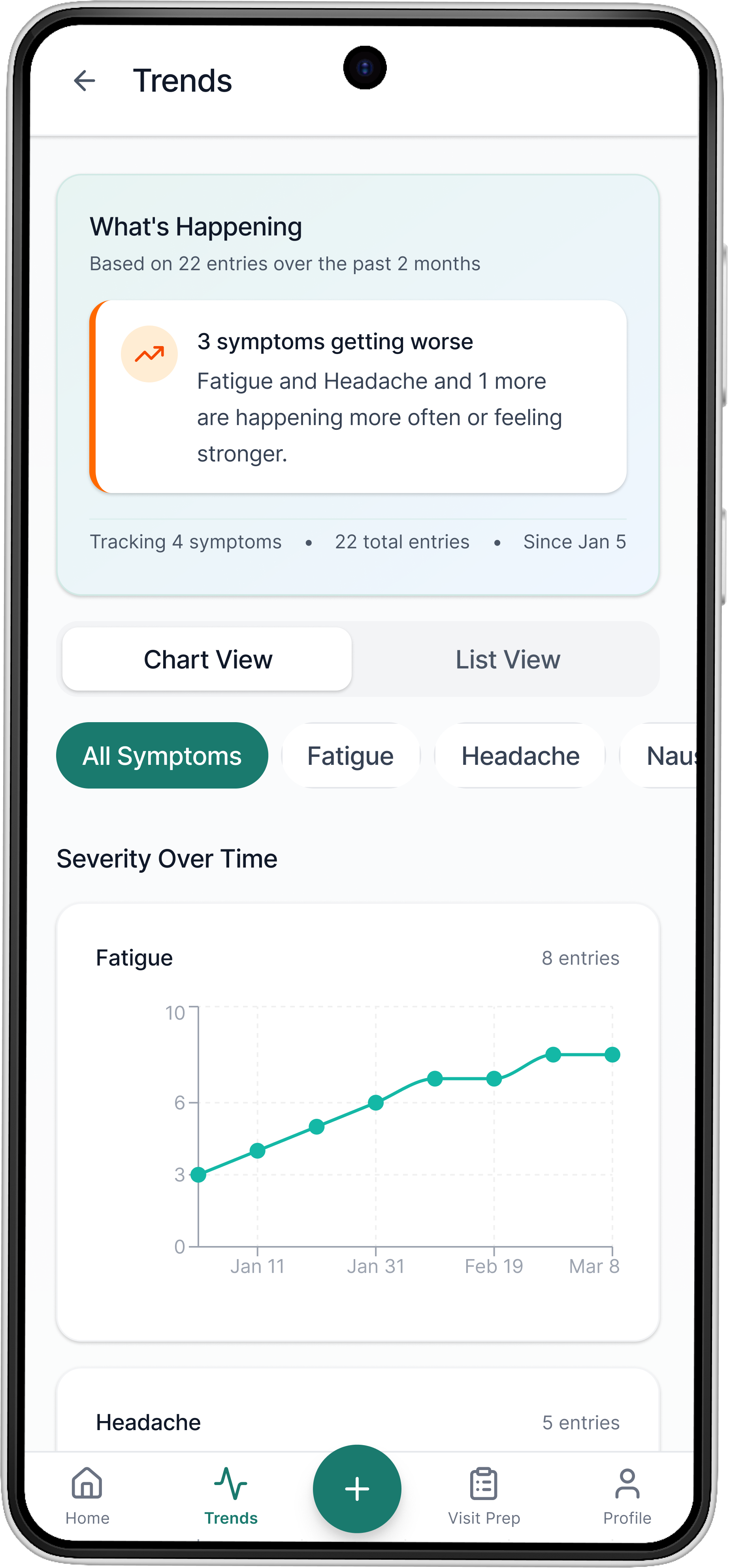
Over time, the app organizes entries into a health timeline and generates an AI-supported visit summary that highlights what matters most.
Quick Logging
Fast symptom and medication logging with minimal steps.
Voice Input
Voice-to-structured health entry for natural capture.
Health Timeline
Longitudinal view of health events over time.
AI Summary
AI-generated visit summary highlighting key concerns.
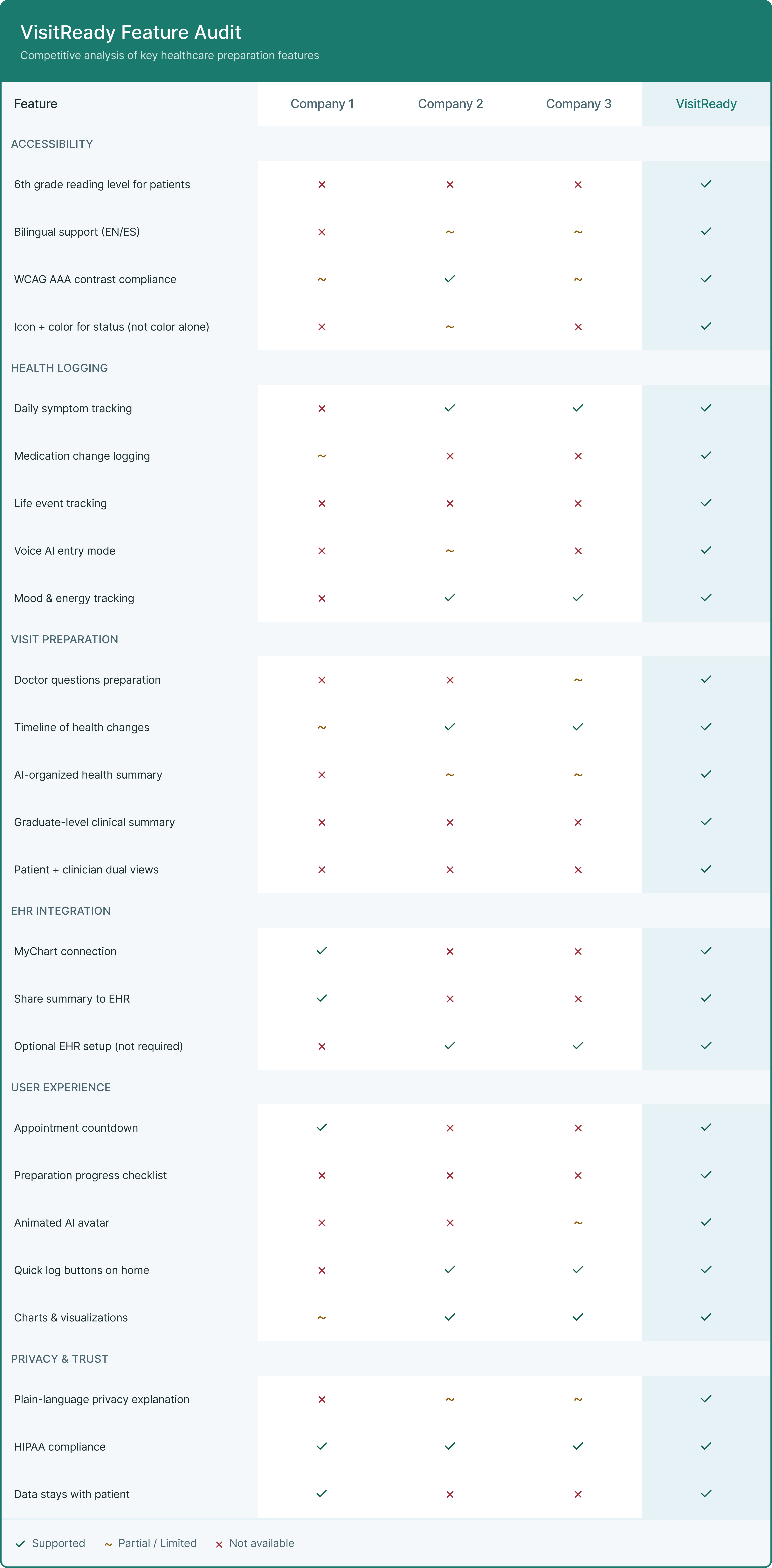
Where existing tools fall short
I reviewed existing tools in symptom tracking and visit preparation. While many apps support tracking, they often require consistent manual input and do little to help users translate that information into something useful during a visit.
Reducing effort at input, increasing clarity at output
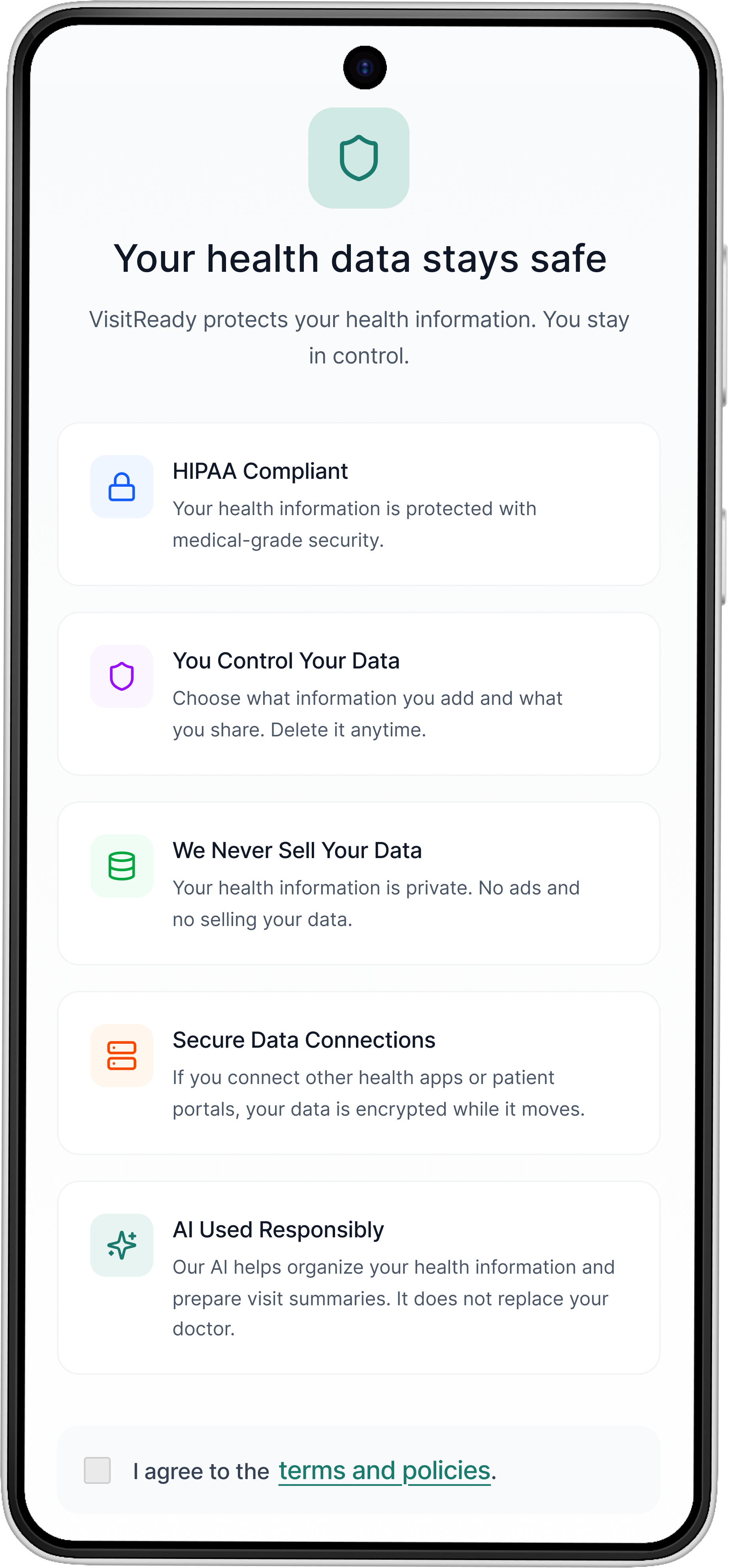
Because this product sits at the intersection of healthcare and AI, the interaction model needed to feel simple, supportive, and trustworthy.
Low-friction Entry
Minimize steps and decisions at the point of logging.
Progressive Disclosure
Reveal complexity only when the user is ready for it.
Trust Through Transparency
Make the system's behavior visible and predictable.
Structured Output
Summaries designed for real-world clinical conversations.
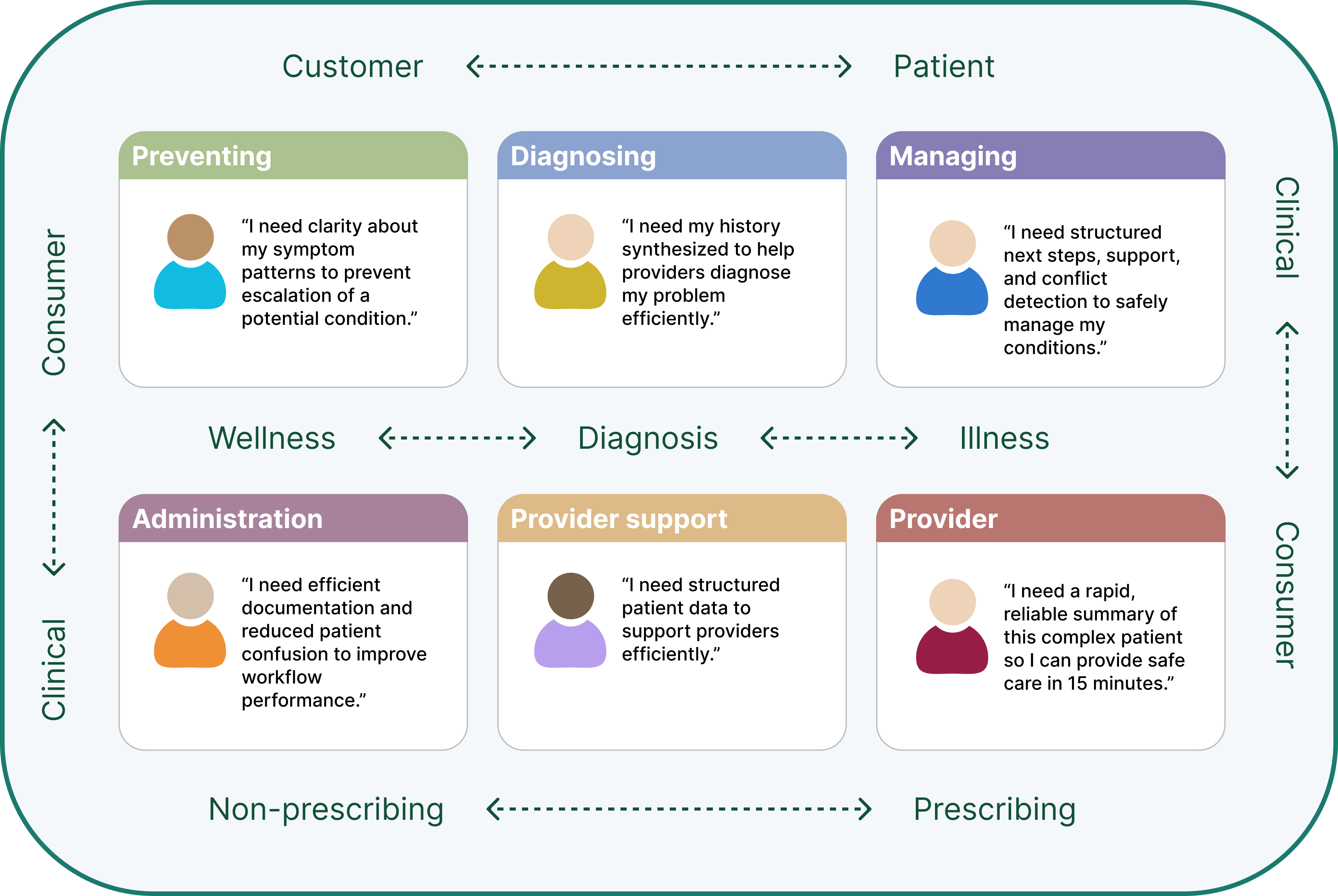
Designing VisitReady as a system, not just a product
I used a HUMM framework (Human, User, Machine, Method) to ensure the experience worked not only at the interface level, but within the broader healthcare ecosystem.
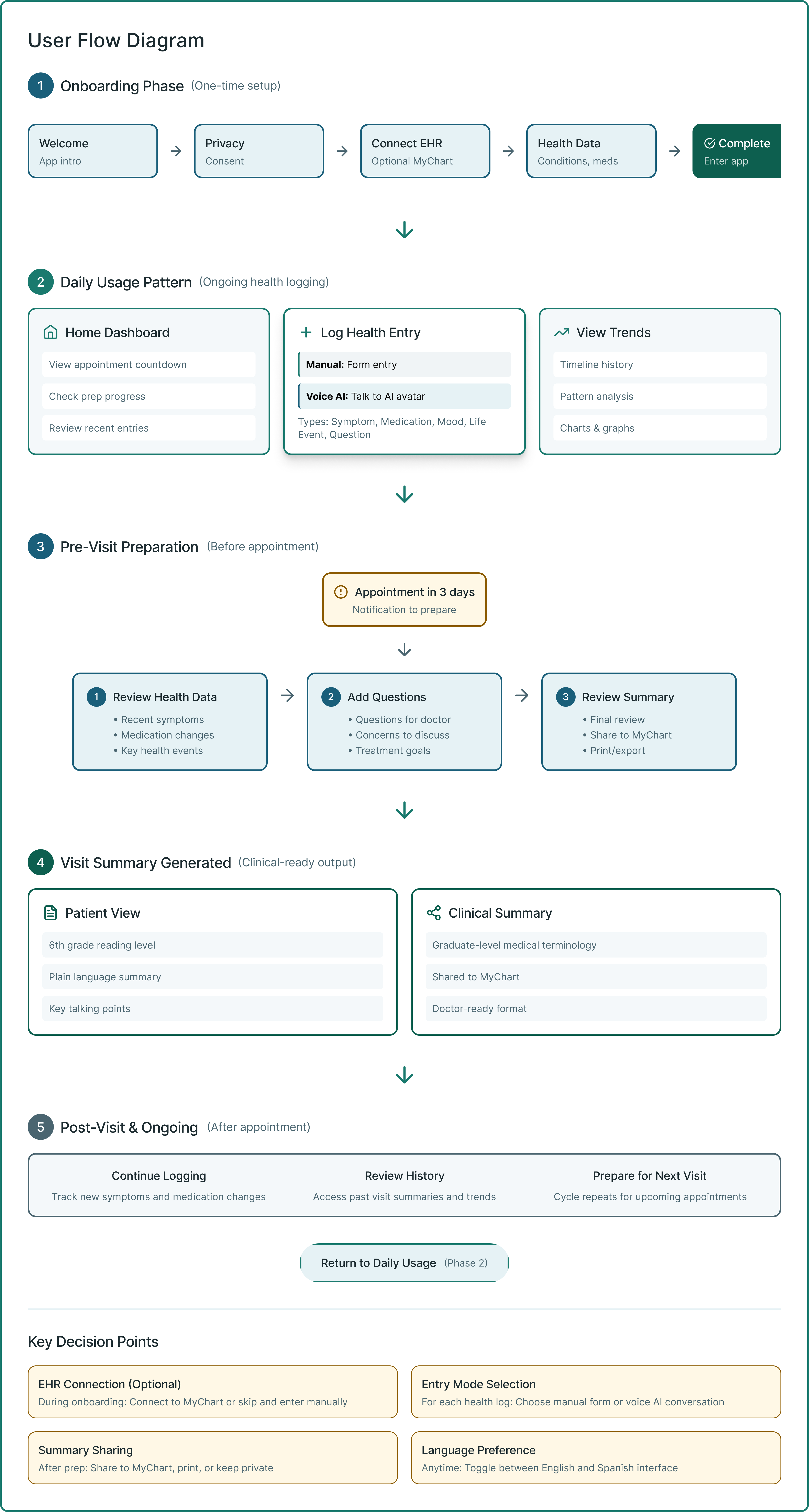
Mapping the full experience end-to-end
Before designing individual screens, I mapped the full VisitReady experience to understand how patients move from everyday tracking to appointment preparation.
Users were not sure how to start
In the first round of testing, the concept resonated but the interface asked users to do too much interpretation.
- Users hesitated at the entry point
- Voice logging lacked clear feedback
- Forms felt too dense
- Users didn't understand logging value
- Clarified the primary action with a prominent button
- Added recording and processing feedback
- Broke inputs into step-by-step flows
- Added context connecting logging to summaries
From usability to trust, continuity, and clarity
Once the logging flow was easier to use, the next round focused on the broader experience.
- Users wanted confirmation after logging
- Manual scrolling interrupted flow
- Summary was useful but hard to scan
- AI needed more visible cues
- Reinforced successful actions with confirmations
- Improved flow with auto-scroll
- Restructured summary into clear sections
- Made AI activity more visible with labels
Helping patients track as they go, not remember everything later
VisitReady evolved into a focused, supportive experience. Logging became faster. The interface provided better feedback. And the summary became a real tool patients could bring into an appointment.
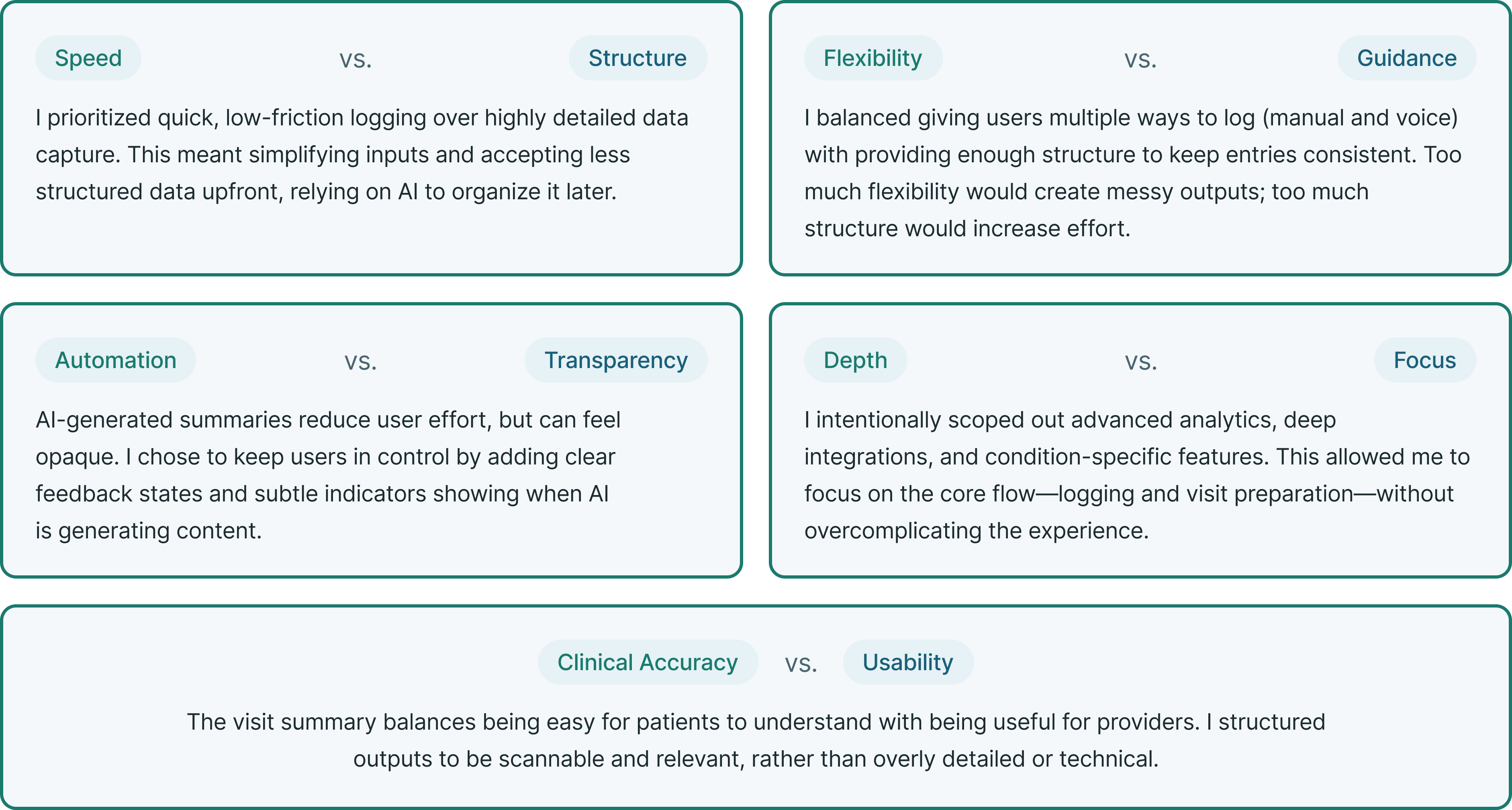
Intentional decisions within a short sprint
Designing within a short sprint required making intentional tradeoffs. I focused on what would make the experience usable and valuable in real-world conditions.

Where this could go next
VisitReady has room to grow into a more robust chronic care and visit preparation platform.
- Validate summaries with clinicians
- Expand condition-specific tracking
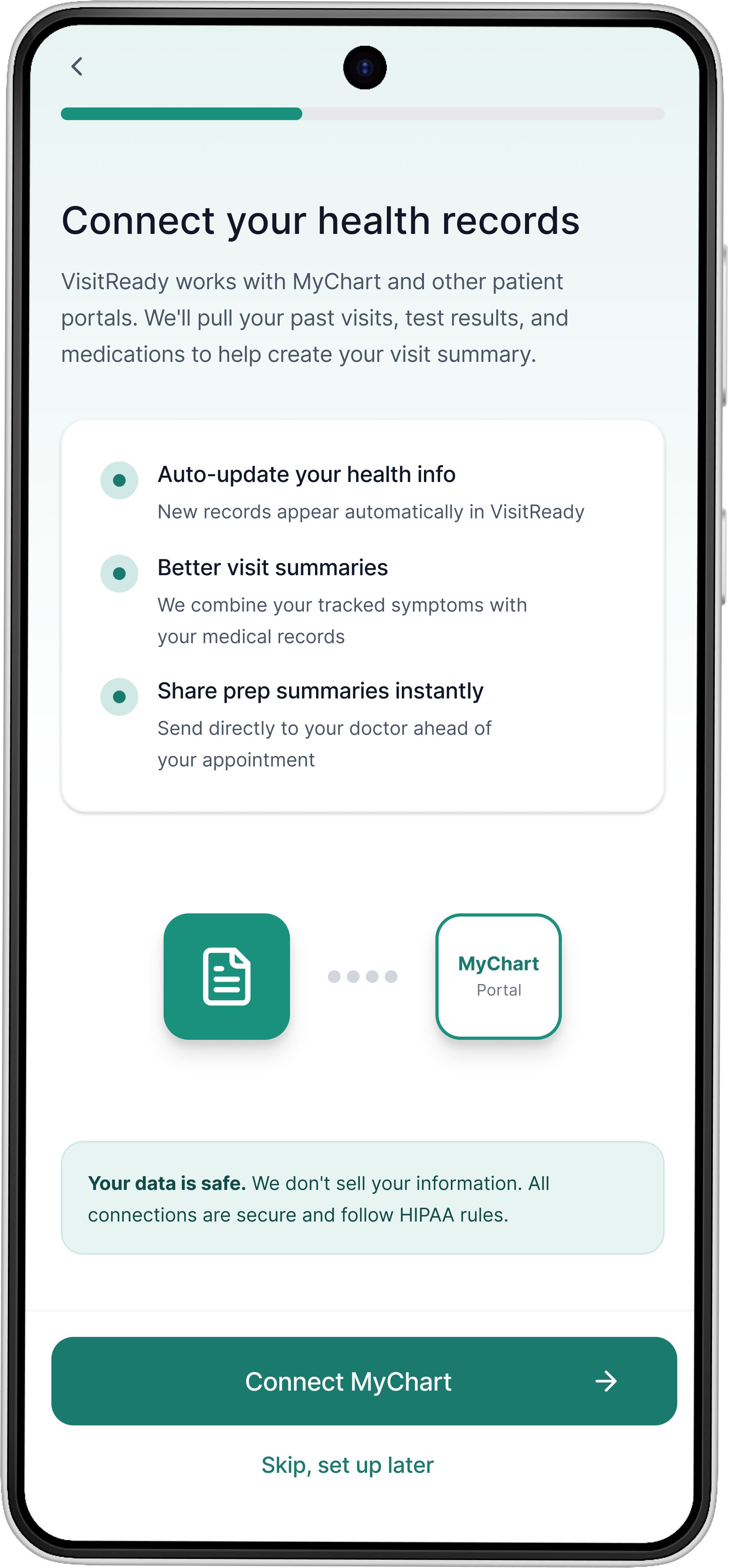
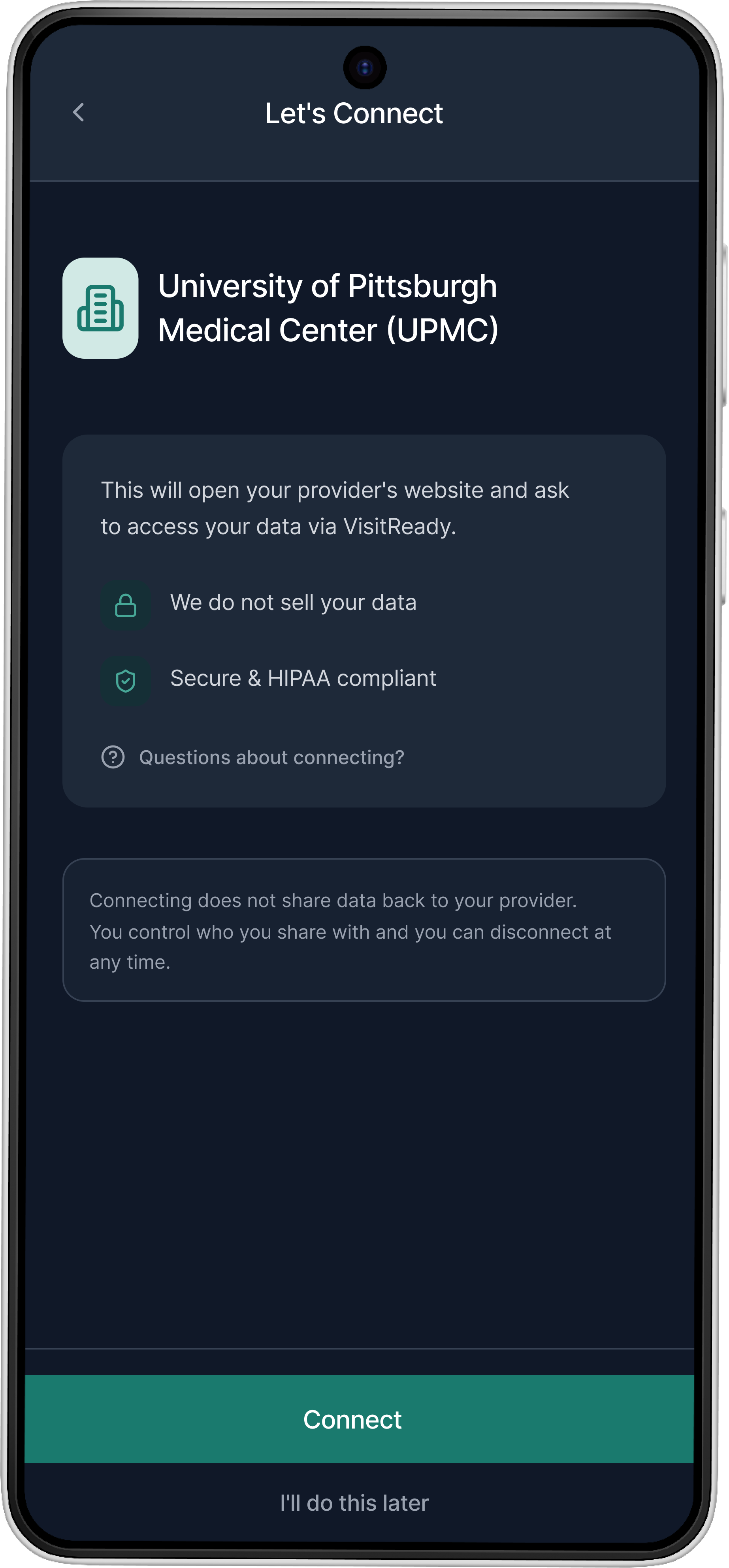
- Explore EHR or provider-side integration
- Add more personalized summary customization